
CONTEXT
Facing increased challenges
Reindeer herders today face many challenges, including climate change (resulting in later springs and colder summers), high rates of predation on young calves, and restricted access to land due to increased encroachment (by mining, wind farms, hydroelectric dams and tourism). Given these concerns about their future, they wish to better understand how the cumulative effects of these changes are currently affecting the reindeer-herding economy and lifestyle, the land, as well as their future impact on Saami reindeer-herder culture and language.
When they finish school, young Saami students have to make choices based on what they believe the future holds. Would their best prospects be in mining, tourism, or other jobs combined with reindeer herding?
Currently about 10% of the Saami are connected to reindeer herding; 2,800 are actively involved in herding on a full-time basis. According to the Swedish Reindeer Husbandry Act, only the Saami population has the right to conduct reindeer herding in Sweden. However, in order to exercise this right, it is necessary to be a member of a Sameby. A Sameby covers an extensive geographical area, often stretching from inland forests to the mountains on the border with Norway. A Sameby consequently encompasses the annual migration of reindeer (mountain reindeer) from forest to mountain. Over the years tensions and conflicts have developed between Saami reindeer herders and Saami that have lost their rights to herd. Conflicts of interest over land rights, access to natural resources and political rights often create tensions between the reindeer herders and other Saami (ES Reinert 2006).
The development of leg islation on indigenous rights in Sweden has been rather insignificant. The Saami have definitively lost their ownership of the land and their individual pasture rights. However, at the same time, they have obtained good reindeer herding land (Ulf Morkenstam 2005). Reindeer herding is considered a way to maintain and preserve local knowledge, Saami culture and language.
Sameby (which include grazing land for reindeer) are being threatened by the multiplication of economic development projects (e.g. mining, tourism, wind farms, roads, etc.). The Swedish government has encouraged dialogue between mining companies and Sameby governors to find compromises regarding land access. This is taking place in a context in which the land for reindeer herding is shrinking. Winter and summer feeding grounds and calving and marking areas are affected, making herding increasingly difficult. Several court cases have been won by farmers against reindeer herders.


Strengthening long lasting relationships
Sylvie Blangy has been interacting with the Saami since 2005. She has visited Övre Soppero in northern Sweden six times and has been invited twice to the Øvre Dividal and Alta reindeer marking camps. The Saarivuoma Sameby and the Labba Siida (reindeer-herding unit) have being working to secure their traditional livelihood, culture and language through an active collaboration with scientists.
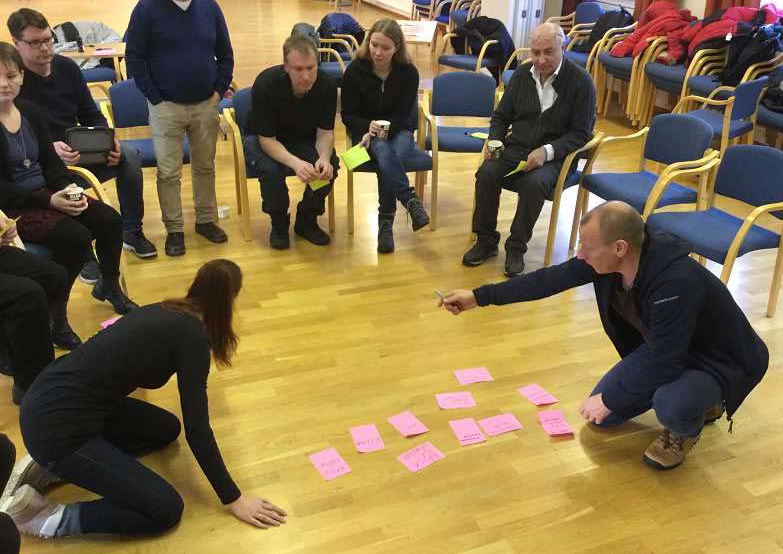
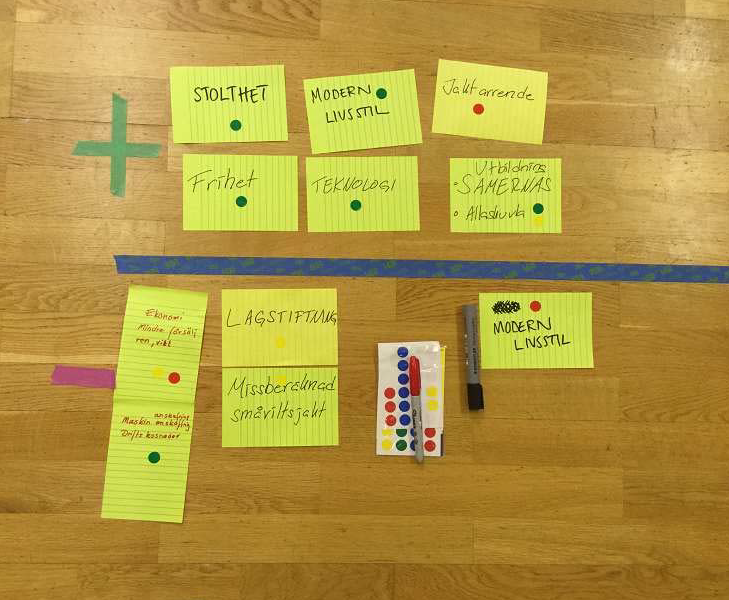
Blangy has facilitated workshops in the Saarivuoma Sameby reindeer herding camp using participatory-action research methods. This has resulted in peer-reviewed research articles published in collaboration with local reindeer herders and Scandinavian research institutes involved in this new type of research project (cf. an example of co-authored article.[i] )
For several projects, Blangy has invited reindeer herders to participate in workshops in Europe and North America in which reindeer herders, Inuit elders, First Nation peoples and scientists have discussed shared approaches to solving local problems concerning the indigenous community.
Extending an ongoing Inuit/Saami youth exchange program
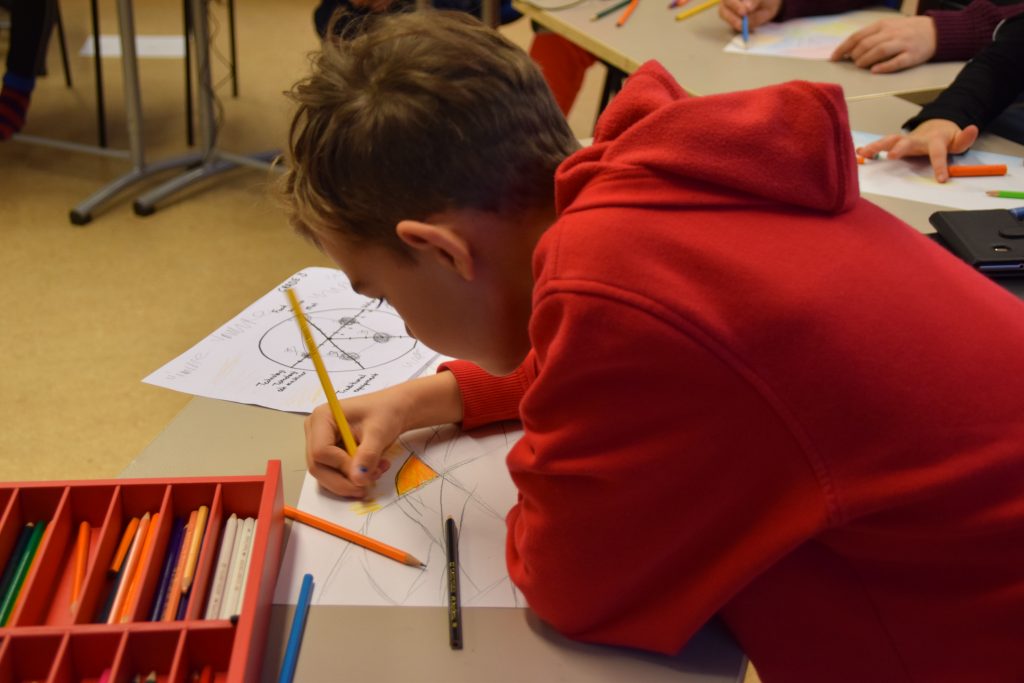
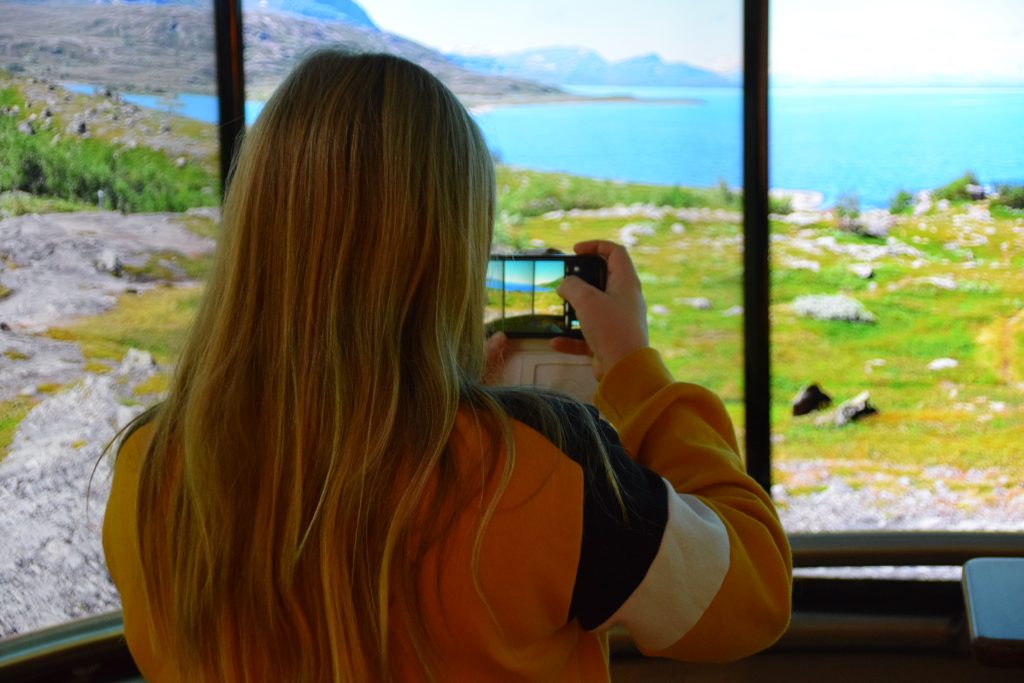
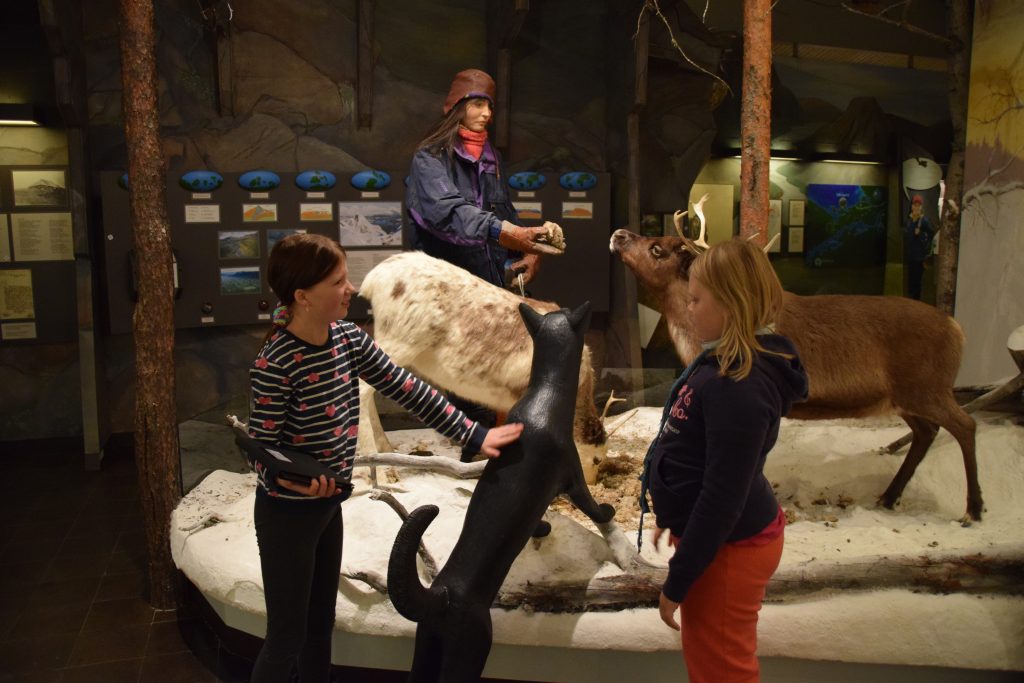
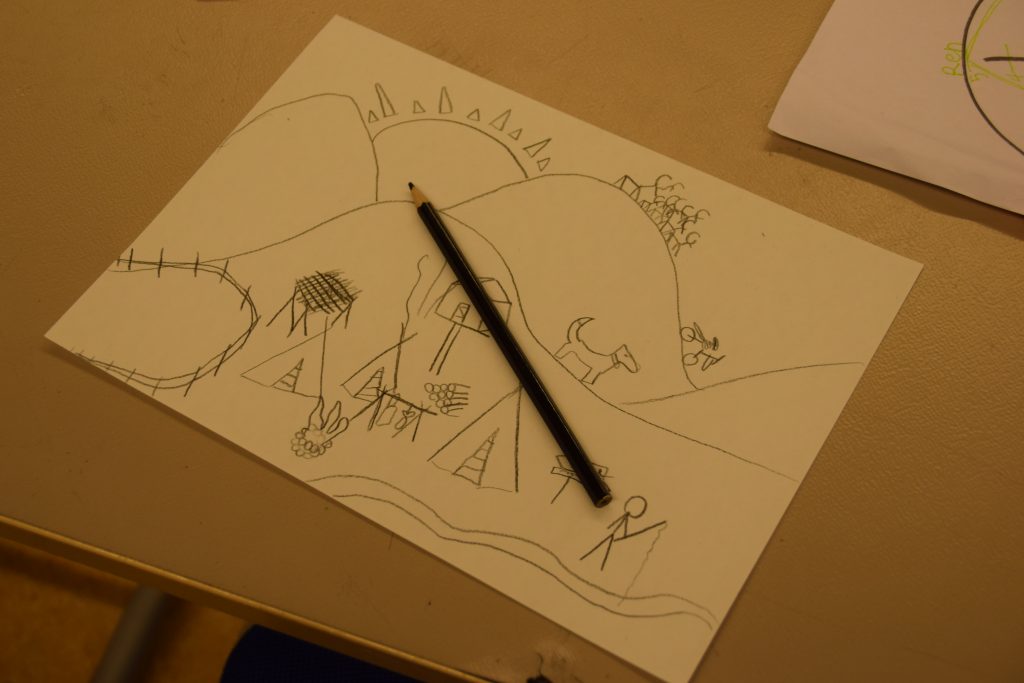
Most recently, a Saami/Inuit Youth Exchange program was developed between the Saami School in Gällivare in Sweden and the Inuit School of Qamani’tuaq in Nunavut, northern Canada. In 2014, the participating Inuit and Saami students produced letters and drawings that they shared with each other. The students were extremely excited to learn about Saami and Inuit culture. A booklet of the students’ letters and drawings was printed this year. Both Inuit and Saami student documented and illustrated caribou hunting practices and reindeer herding activities. They posed questions about Saami and Inuit culture and shared information about their lives and traditional practices.
In the framework of the TUKTU IPEV project (a four-year financed project), we maintained those links and the contact with the teachers at both participating schools. The Gällivare Saami school superintendent, Mikael Pirak, moved to the Jokkmok school and put us into contact with the Jåkkåkaska Sameby chairman, Jan Eric Lantä.
The Inuit and Saami schools are keen to maintain these links and we plan to involve both schools in the proposed research project as partners and collaborators.
It is our hope that the Saami/Inuit Youth Exchange program might re-awaken interest in caribou hunting/reindeer herding and sustainable practices in young people. We also hope to foster appreciation in the students for their own culture and to understand the shared challenges and opportunities that Indigenous peoples across the Arctic face. We have been in contact with a number of Saami partners who would be interested in seeing this project grow. Both Inuit and Saami youth have shown great interest in developing cross-cultural research projects and discovering each other’s cultures through the means of making films, and documentaries and conducting interviews.
Maintaning the links with TUKTU
This proposed new project, BOAZU, is an extension of the TUKTU project. While TUKTU focused on the impacts of mining on the Inuit community of Baker Lake in northern Canada, BOAZU seeks to look at the cumulative impacts of change, mainly in Scandinavia, with a focus on Swedish Sameby and the involvement of Saami school students.
In order to pursue these exchanges and develop a strong Scandinavian/Swedish follow up of TUKTU, a proposal for an initial research project was drafted in July 2017 during a series of workshops with the Jåkkåkaska Sameby at the reindeer-marking camp in Arasluota. This new project, aimed at exploring options and possible future scenarios, will be led by Sameby members and students at the Saami school in Jokkmok, working with a team of researchers from universities in Sweden, Norway and France. In this way, Saami schools, Sameby members and academics will join forces to develop an integrated, interdisciplinary, collaborative participatory-action research program to explore the issues and priorities and develop an action plan. This approach will bring together local expertise and scientific knowledge in order to better understand the magnitude of changes, to analyze their impacts, and to envision the scenarios for the future. The Saami of Sapmi seek an overall view of the changes taking place rather than dealing with one question at a time.