
THE CEFE SAMI PHOTO EXHIBITION









French version

Les SAAMI éleveurs de rennes: impact des changemens globaux
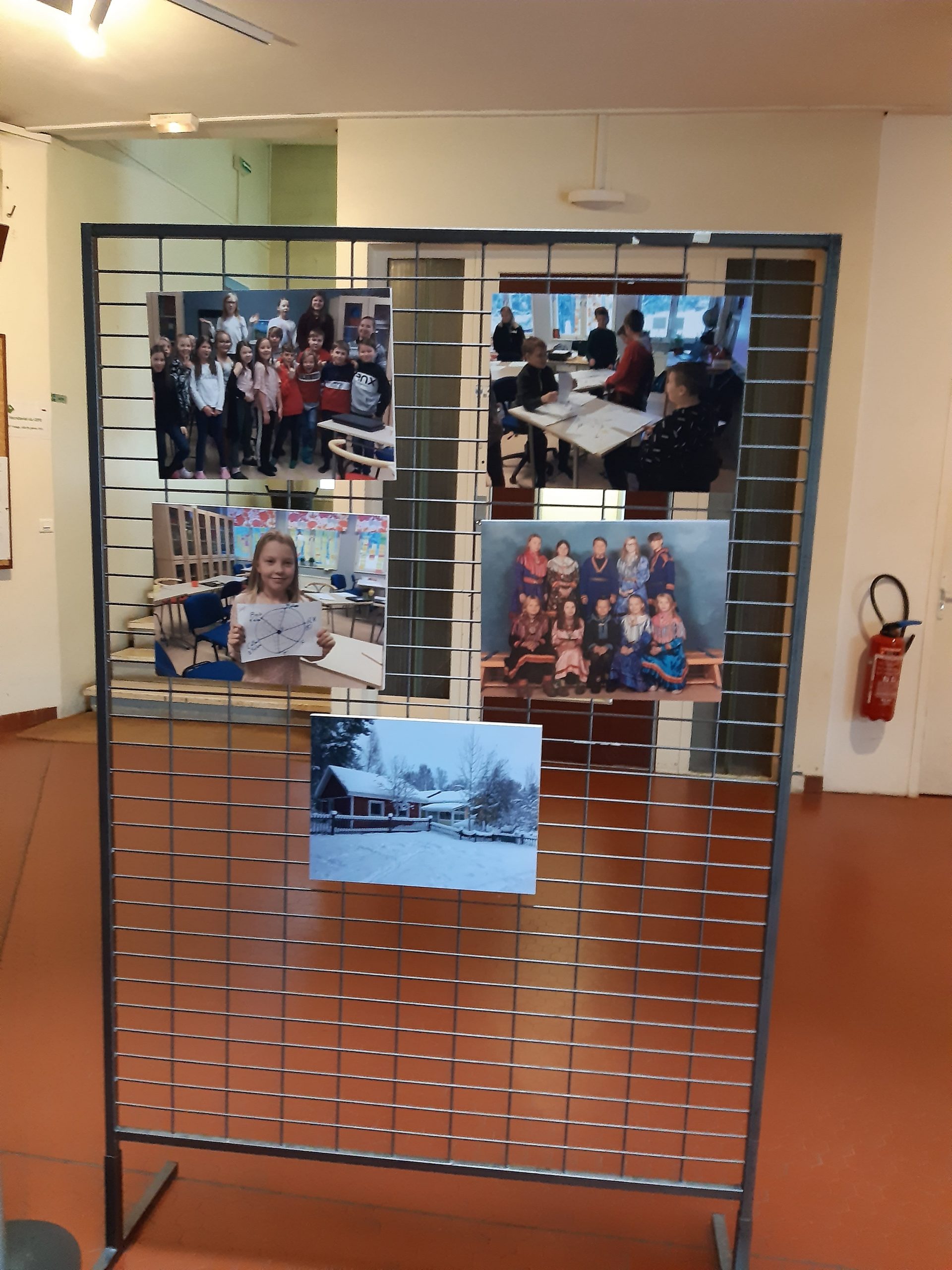
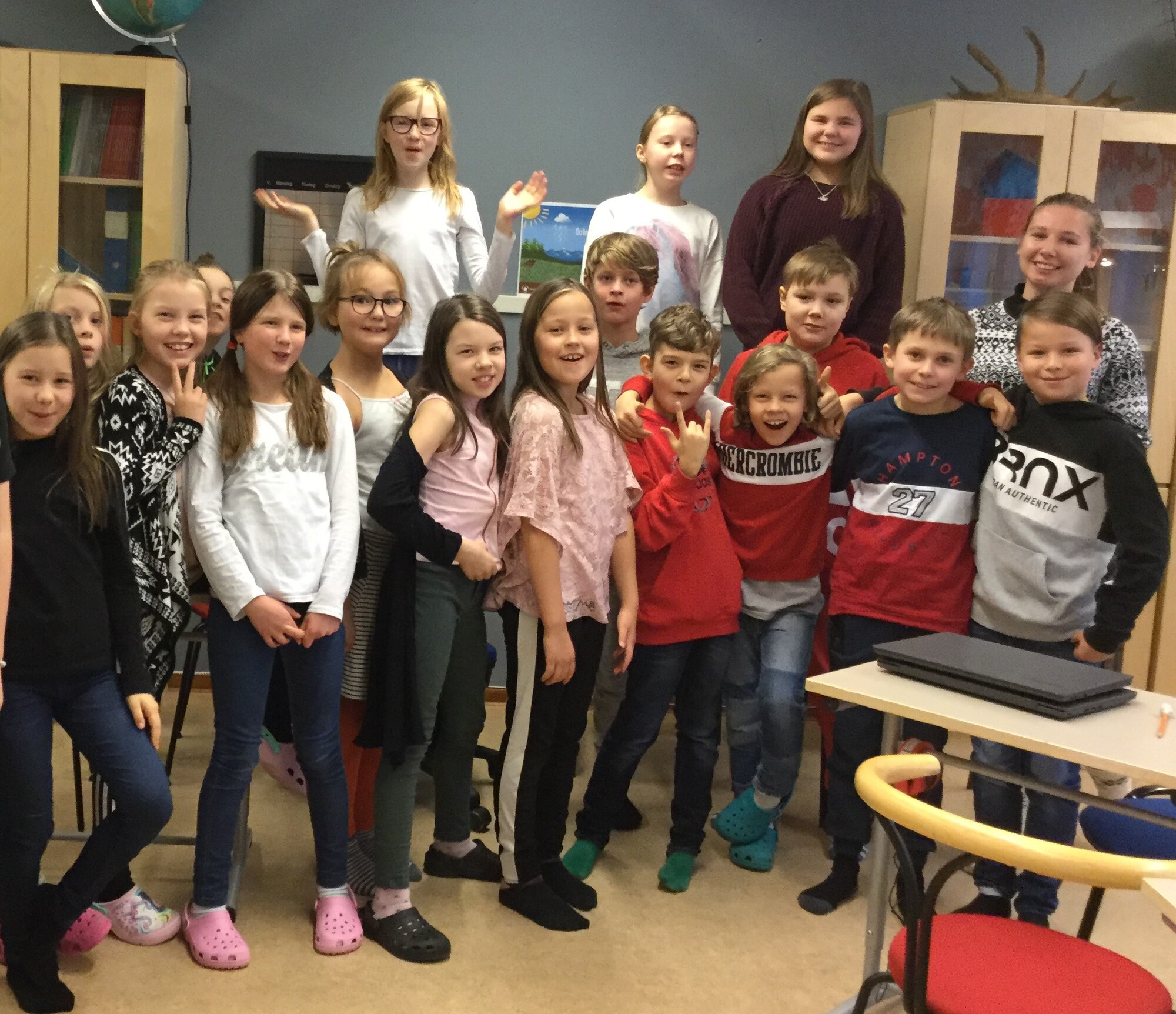
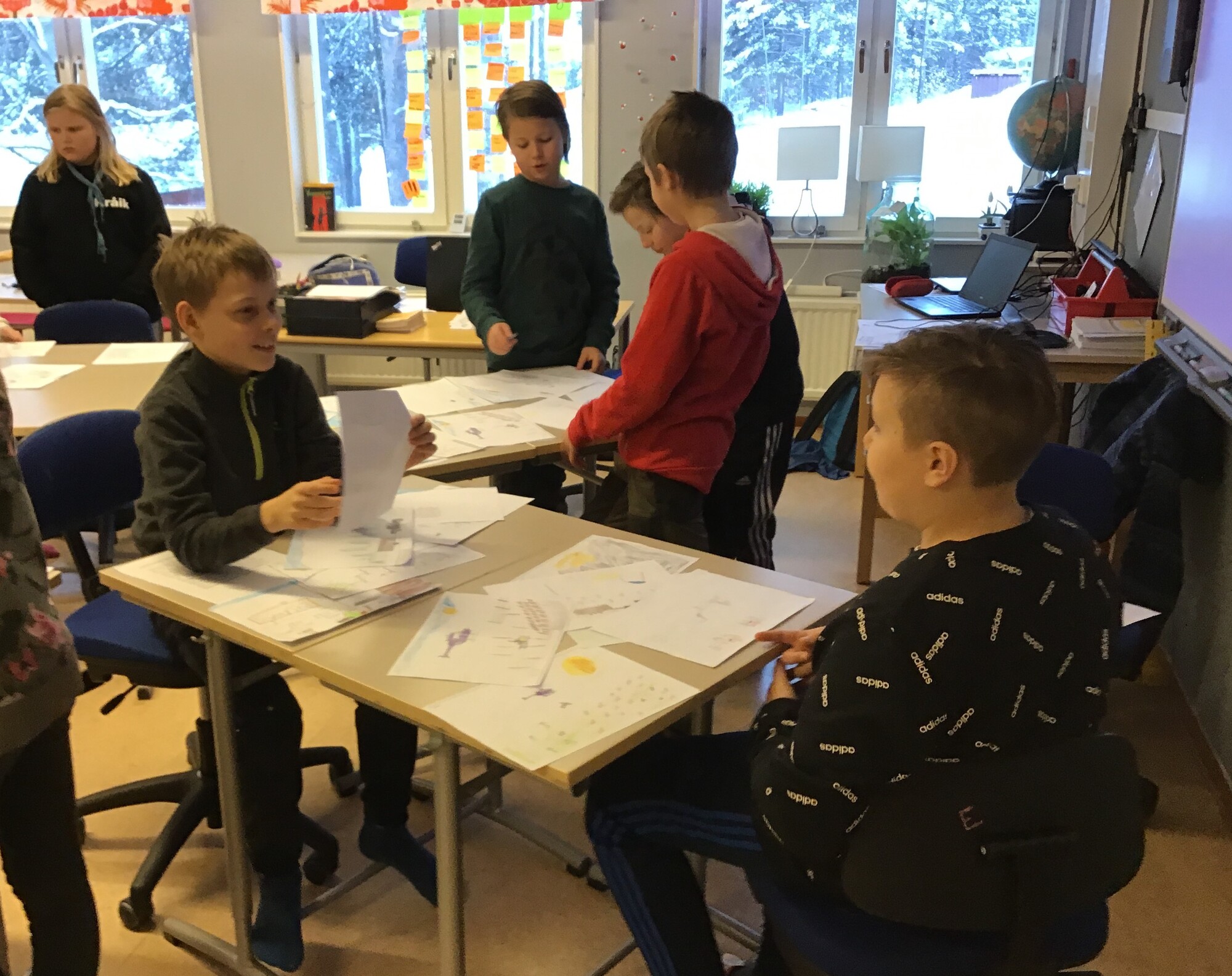
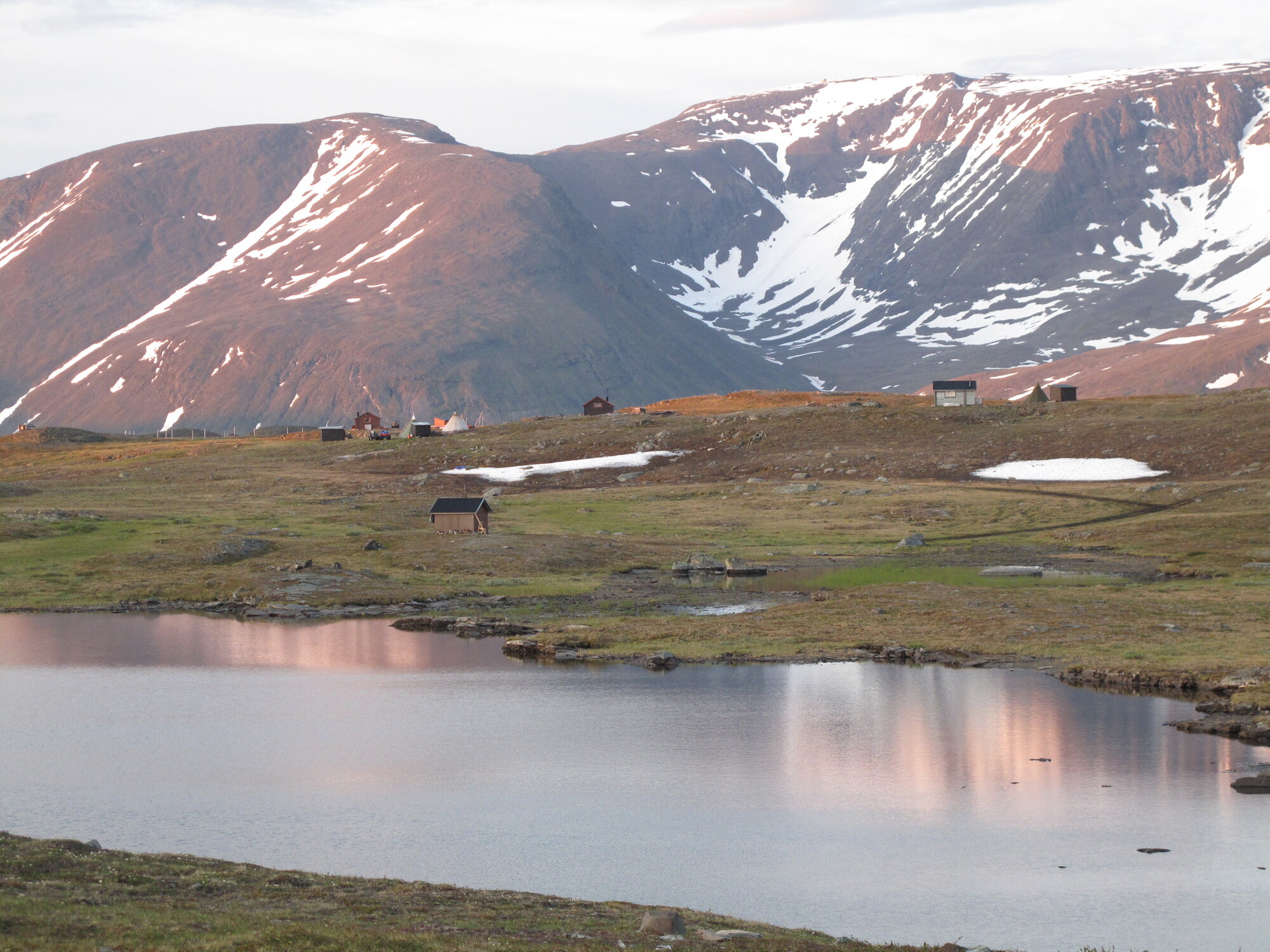
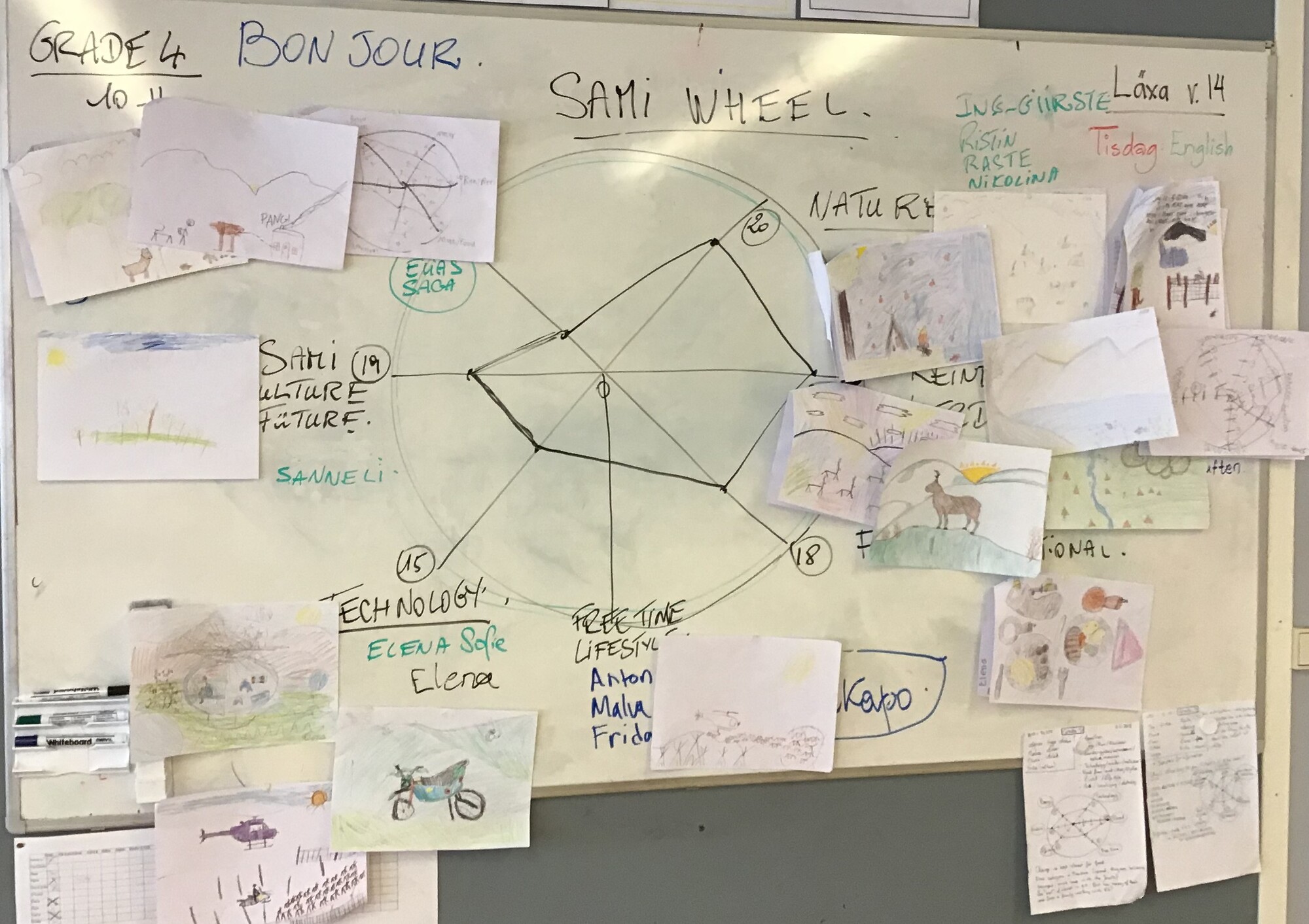
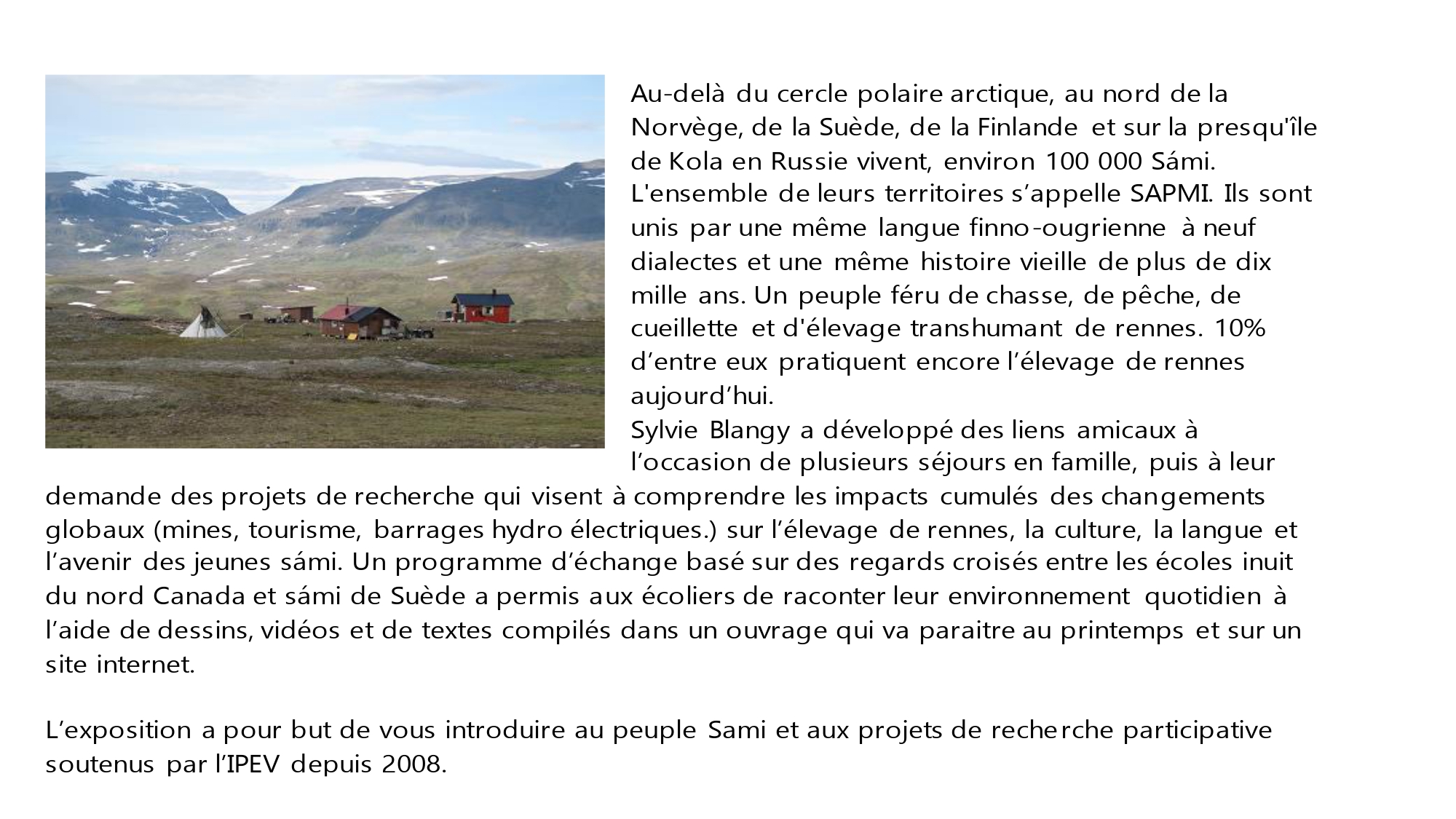
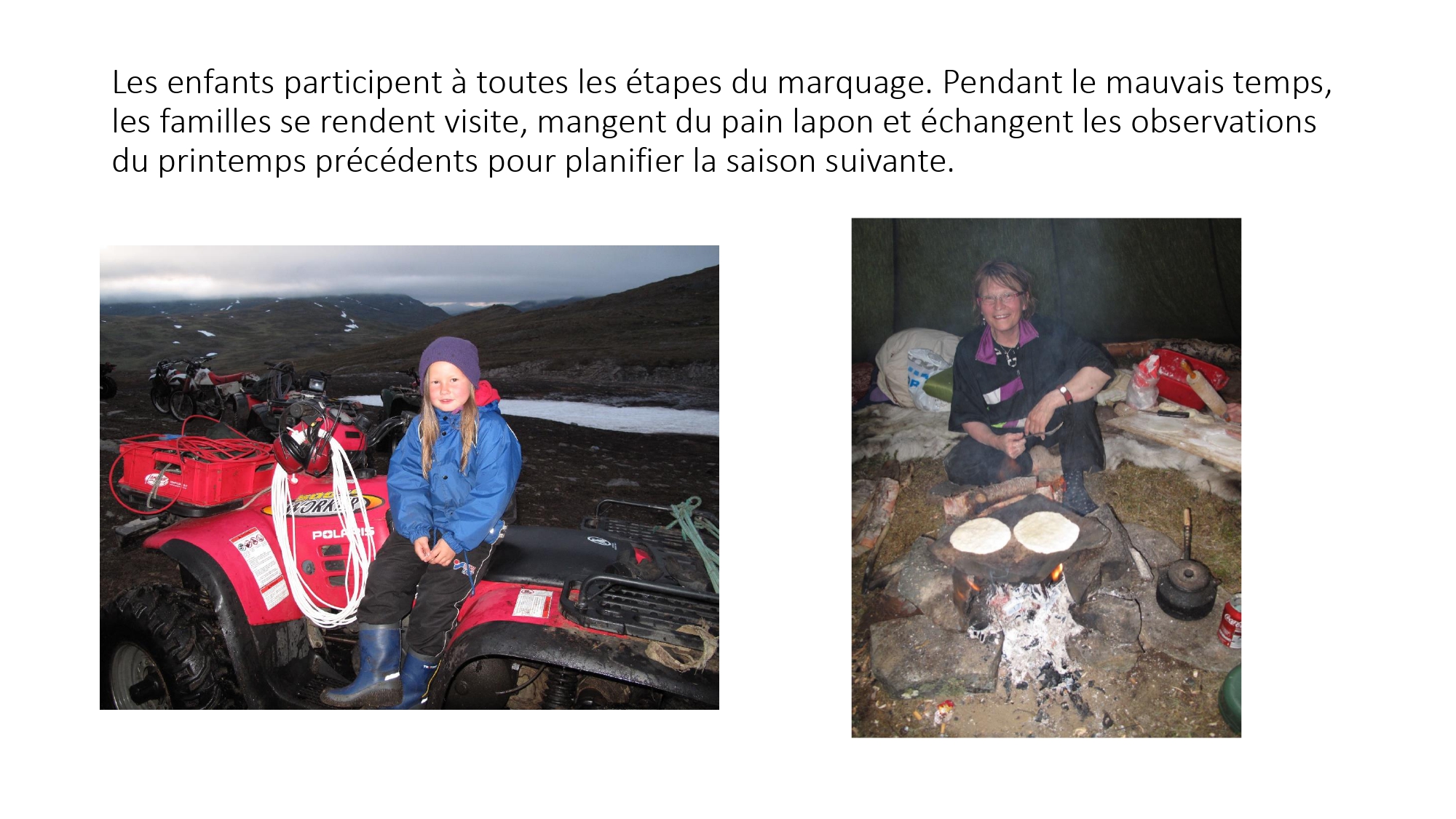
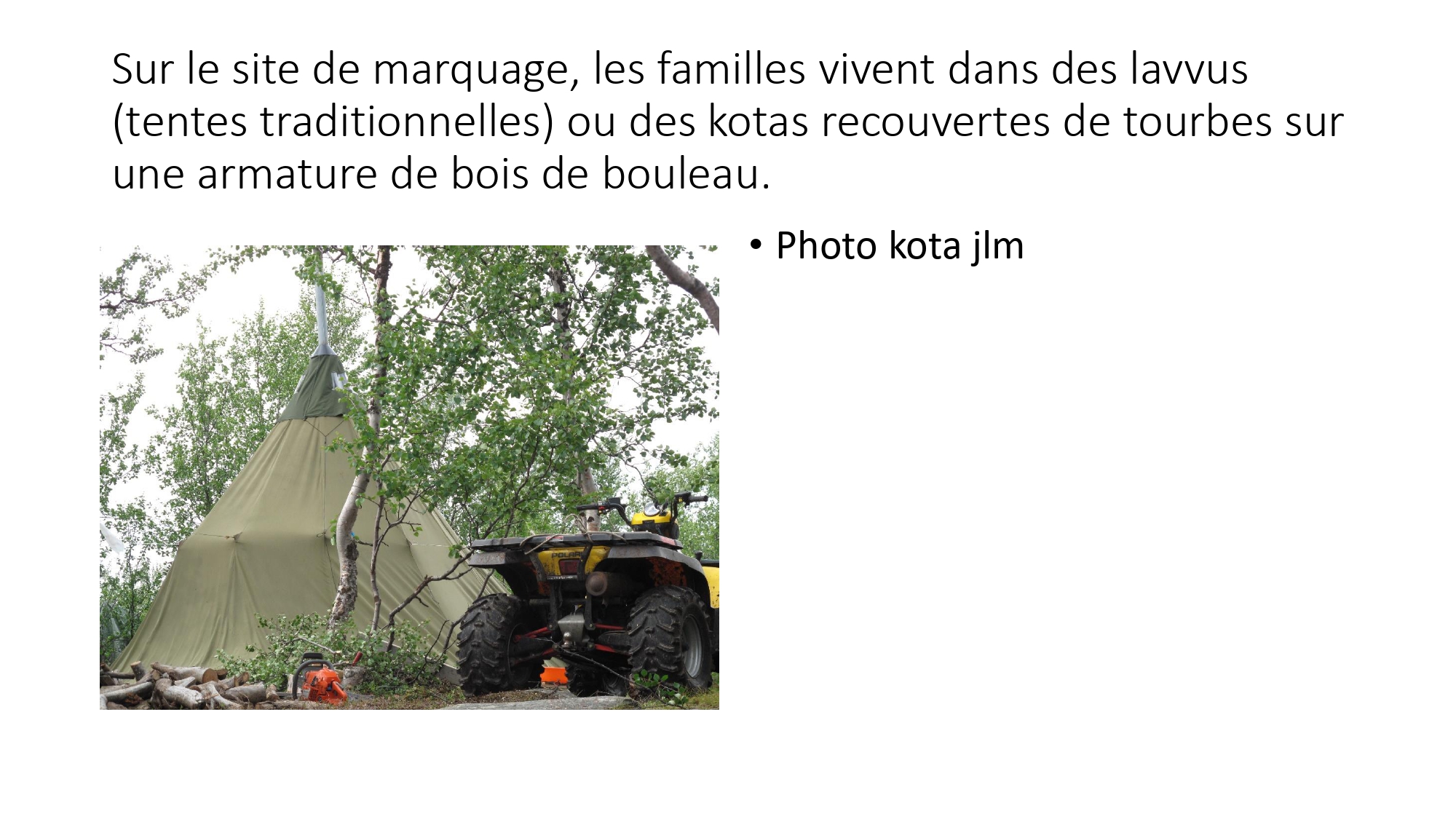
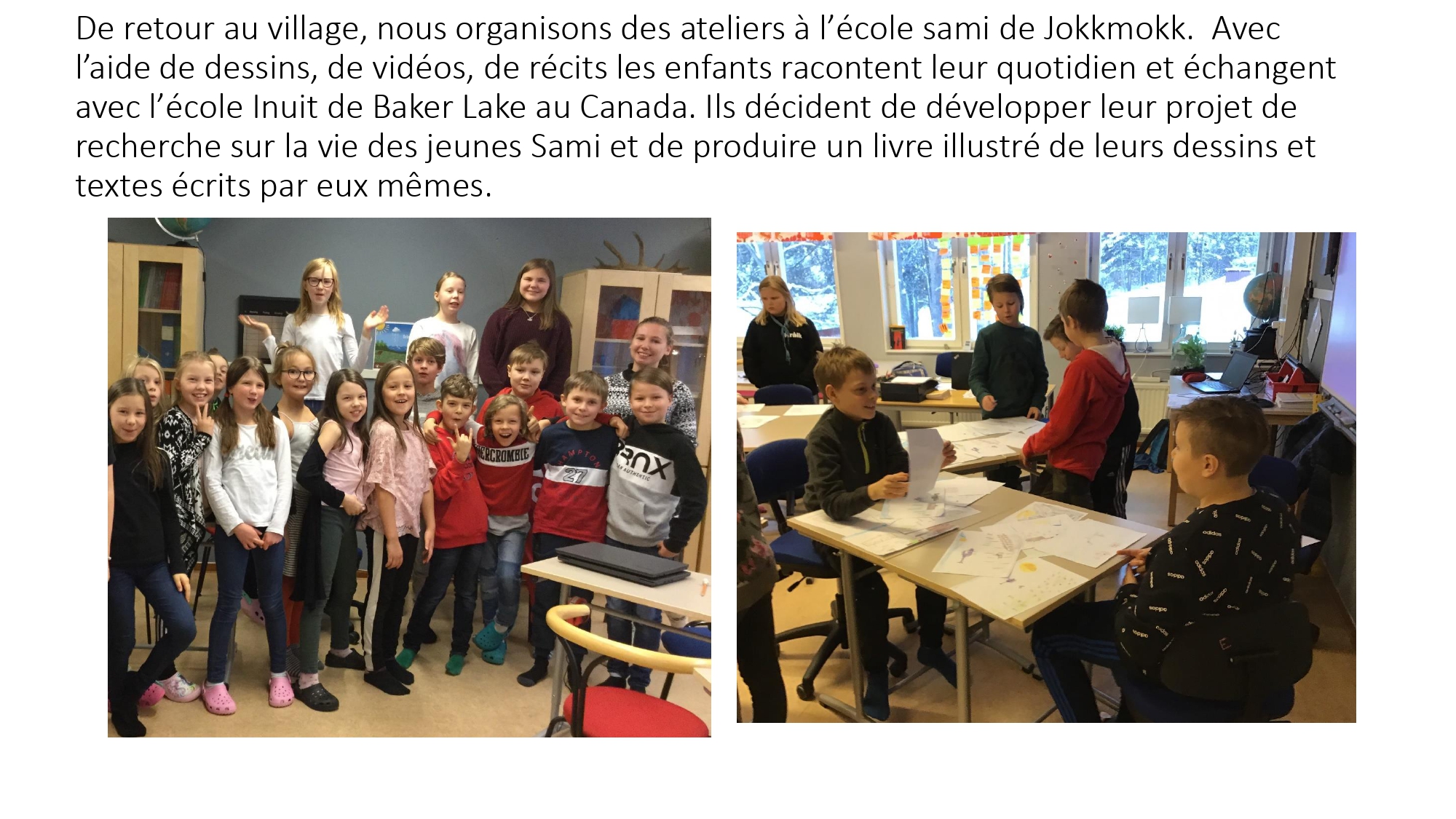
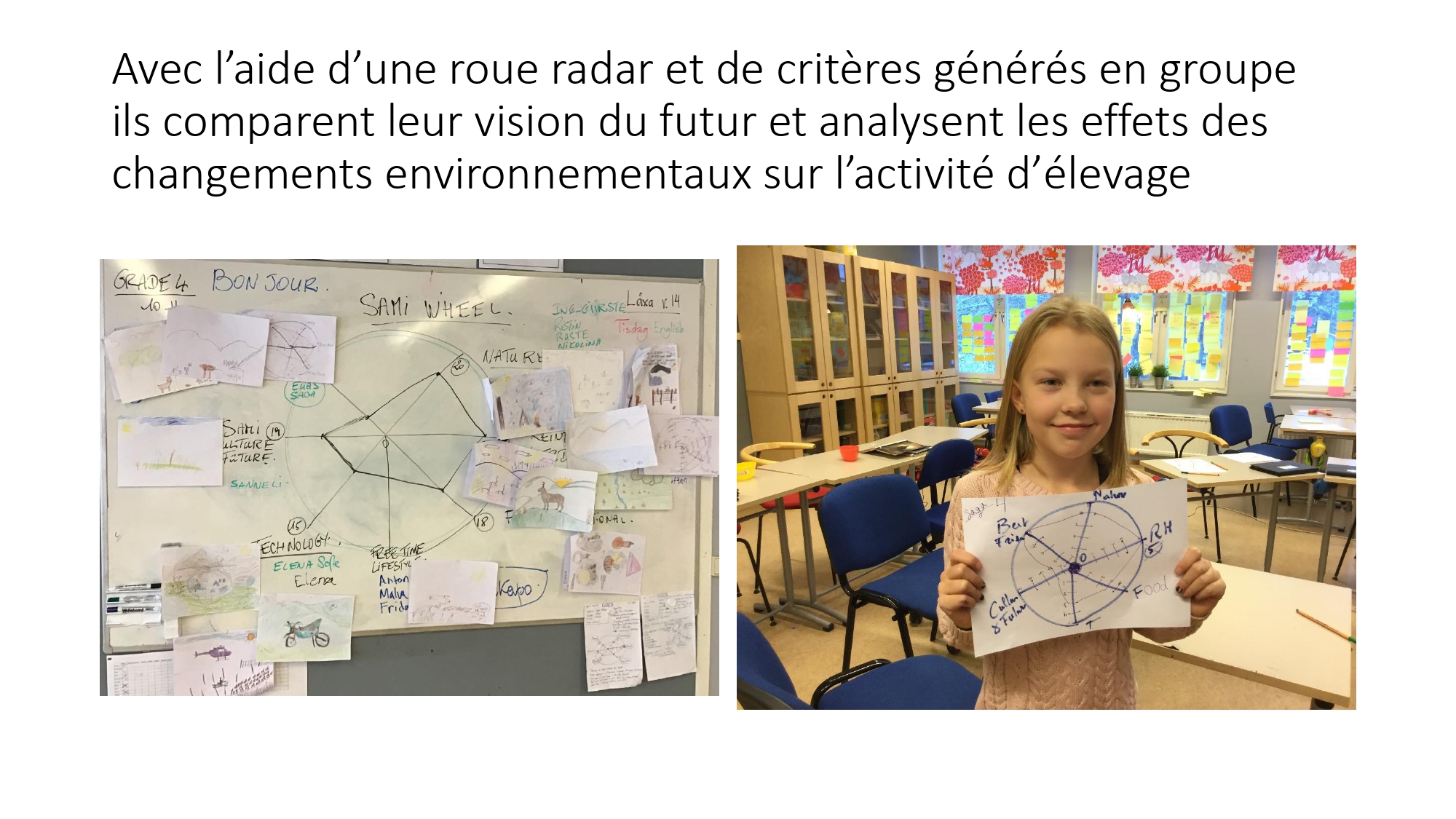
Au-delà du cercle polaire arctique, au nord de la Norvège, de la Suède, de la Finlande et sur la presqu’île de Kola en Russie vivent, environ 100 000 Saami. L’ensemble de leurs territoires s’appelle SAPMI. Ils sont unis par une même langue finno-ougrienne à neuf dialectes et une même histoire vieille de plus de dix mille ans. Un peuple féru de chasse, de pêche, de cueillette et d’élevage transhumant de rennes. 10% d’entre eux pratiquent encore l’élevage de rennes aujourd’hui. Sylvie Blangy a développé des liens amicaux à l’occasion de plusieurs séjours en famille, puis à leur demande des projets de recherche qui visent à comprendre les impacts cumulés des changements globaux (mines, tourisme, barrages hydro électriques.) sur l’élevage de rennes, la culture, la langue et l’avenir des jeunes Sami. Un programme d’échange basé sur des regards croisés entre les écoles inuit du nord Canada et sámi de Suède a permis aux écoliers de raconter leur quotidien à l’aide de dessins, videos et de textes compilés dans un ouvrage qui va paraitre au printemps. L’exposition a pour but de vous introduire au peuple Sami et aux projets de recherche participative soutenus par l’IPEV depuis 2008.
Photos de Sylvie Blangy, Jean-Louis Martin et Mikael Pirak
Exposition préparée par Sylvie Blangy. Pour plus de renseignements : sylvie.blangy@cefe.cnrs.fr
Témoignage de MIKAEL PIRAK
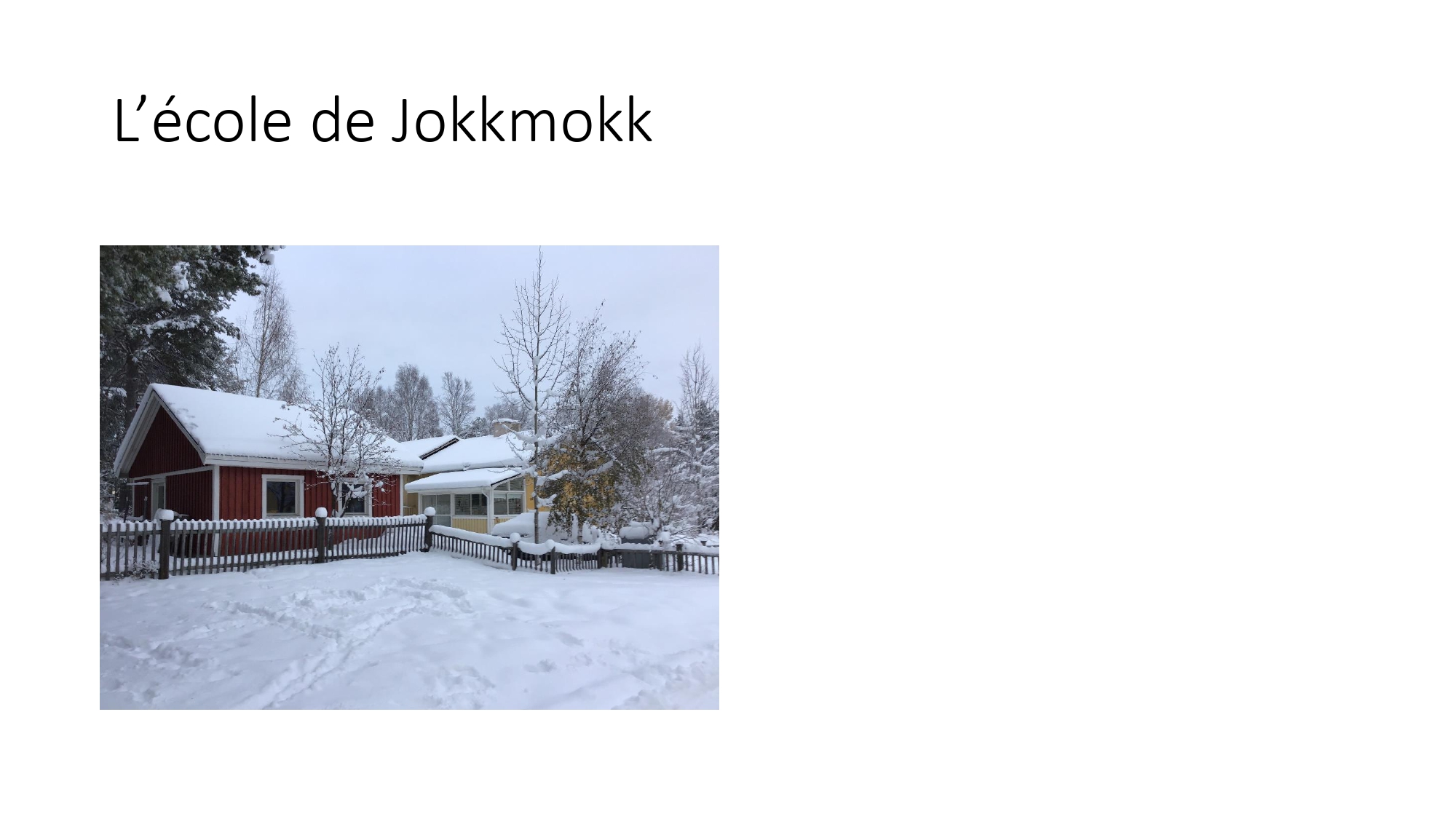
Ce texte a été rédigé par Mikael lors de sa visite au CEFE en décembre 2019 spécialement pour cette exposition. Mikael est directeur de l’école Sami de Jokkmokk en Suède et fils de Lars Pirak grand peintre Sami
« Reindeer herding among the Sámi people
Reindeer husbandry is a lifestyle, and the people who are born into it have no possibility of choosing another way of life. The reindeer are passed from great grandfather to father to son.
In Sweden, reindeer herders belong to a ‘Sameby’, which is an administrative and economic association of several families in the same area who share rights to use the territory for all matters related to reindeer husbandry, hunting, household requirements and handicrafts. But every reindeer herder owns his own herd, which can have from 100 to 300 reindeer. A herder with a family needs at least 300 reindeer.
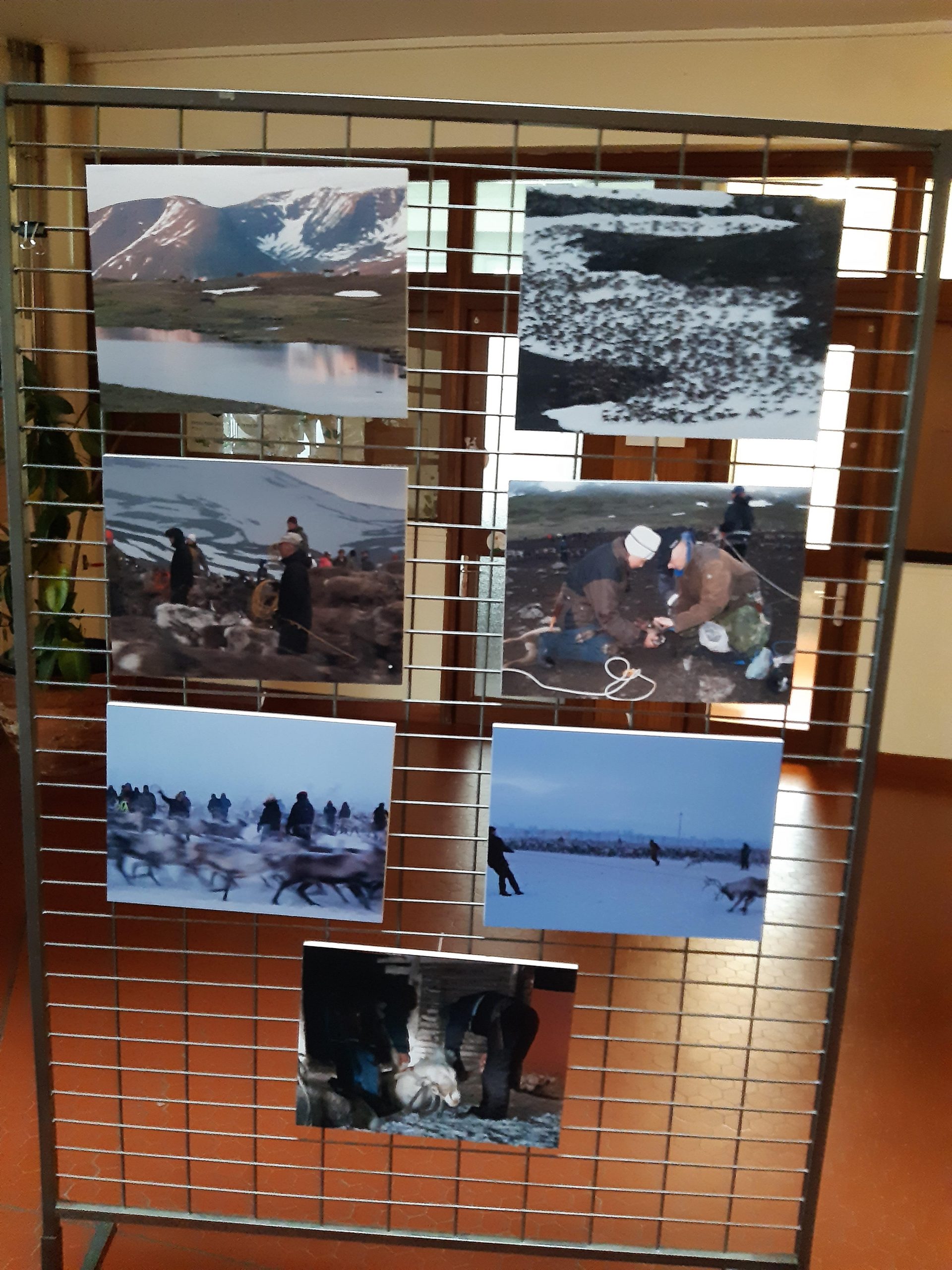
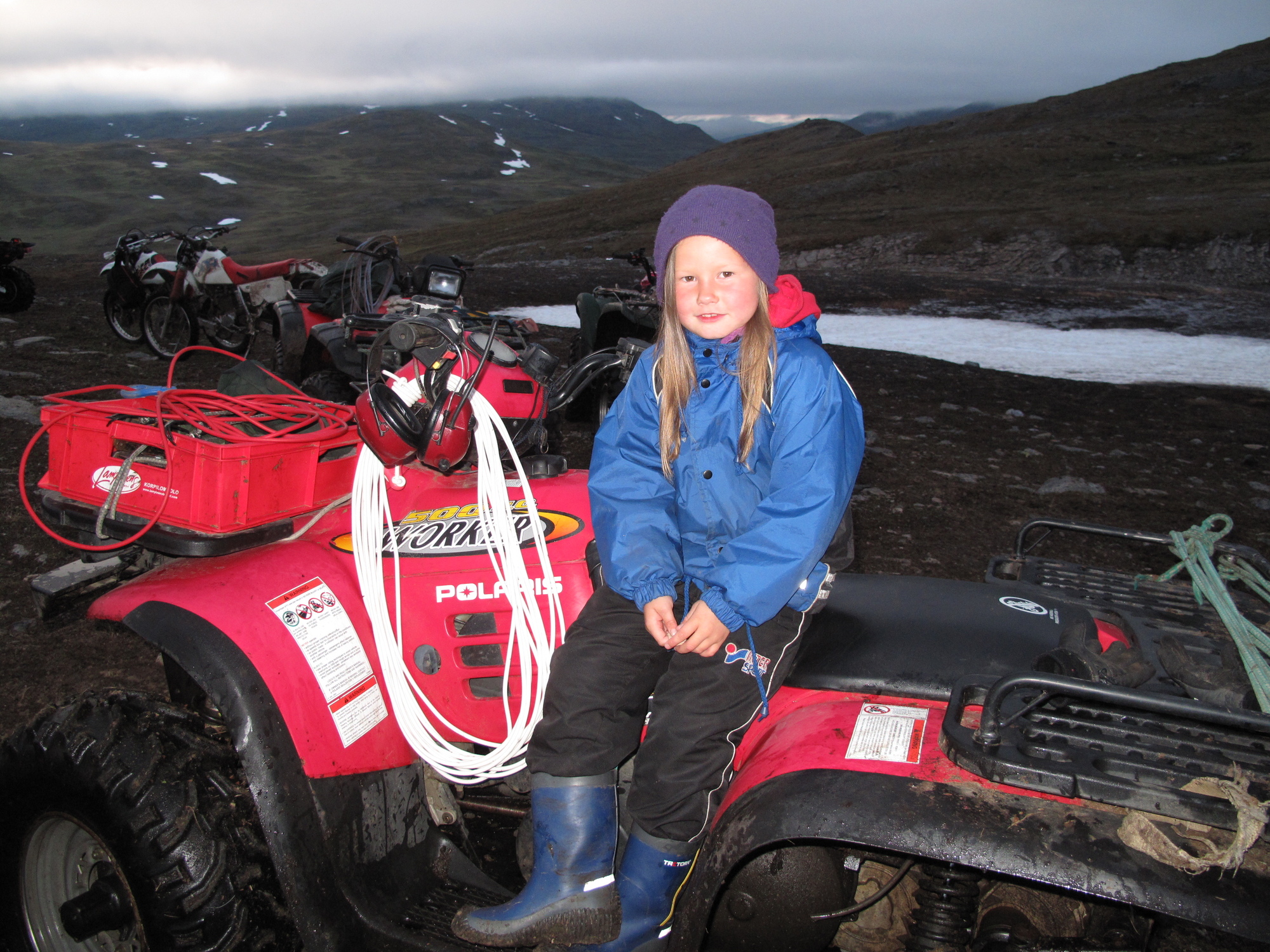
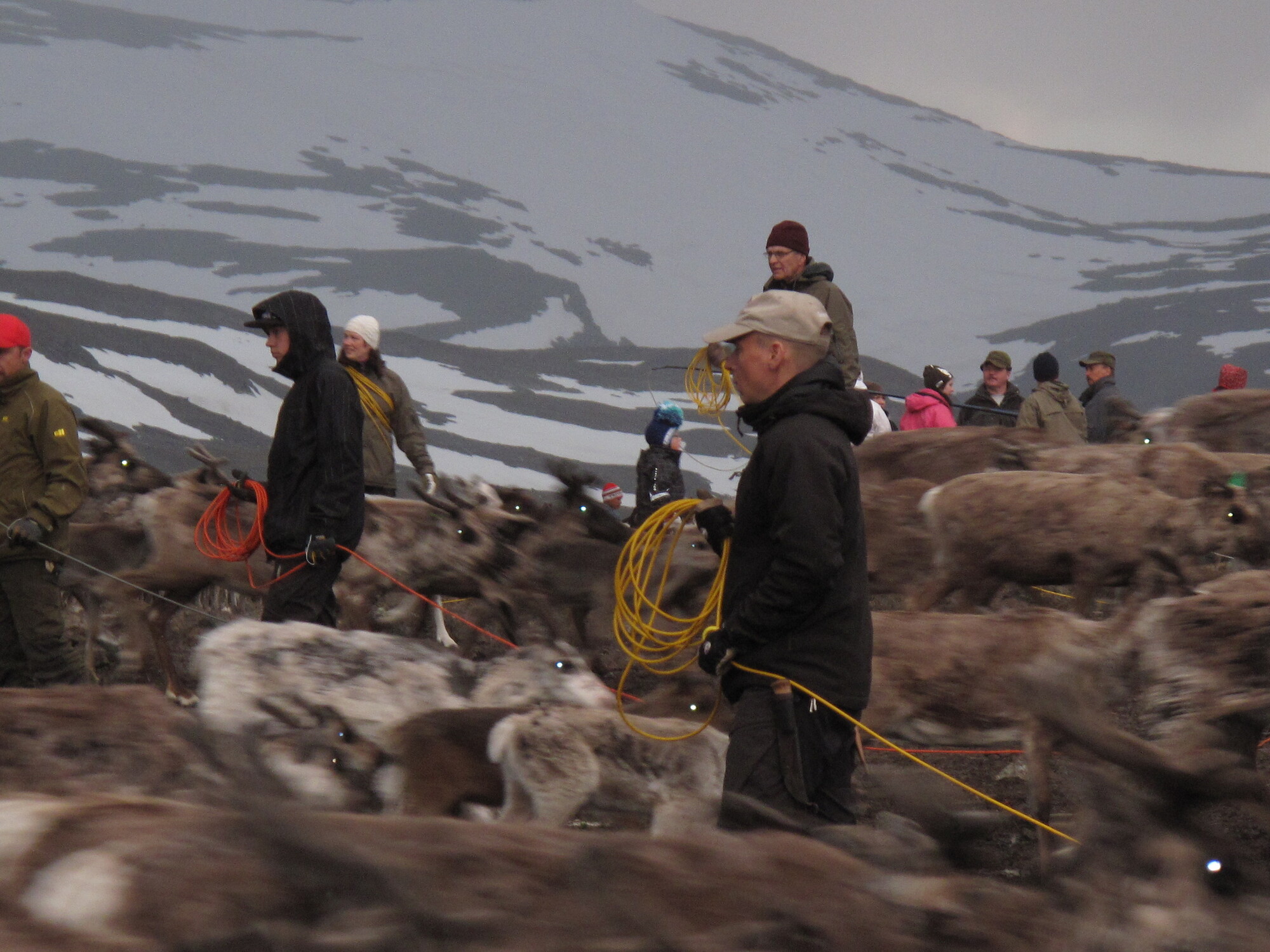
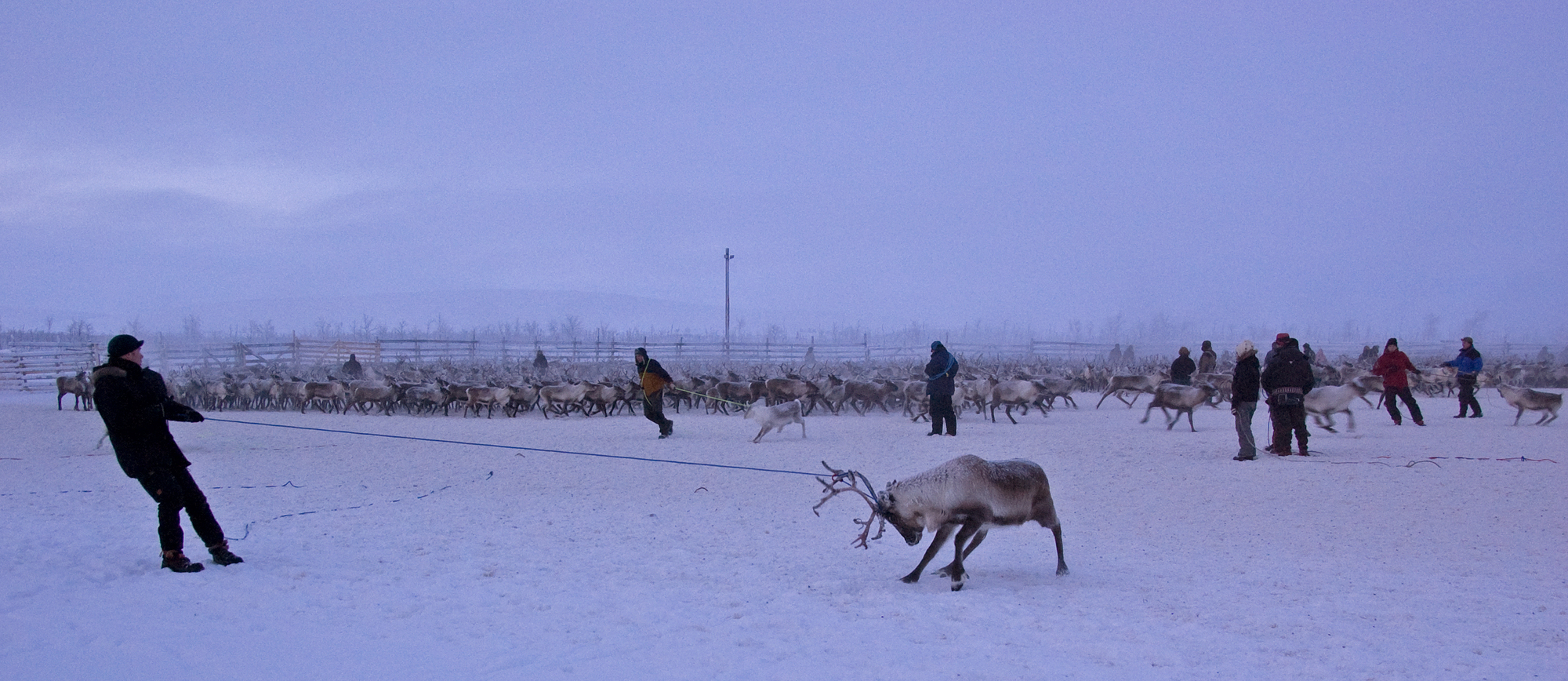
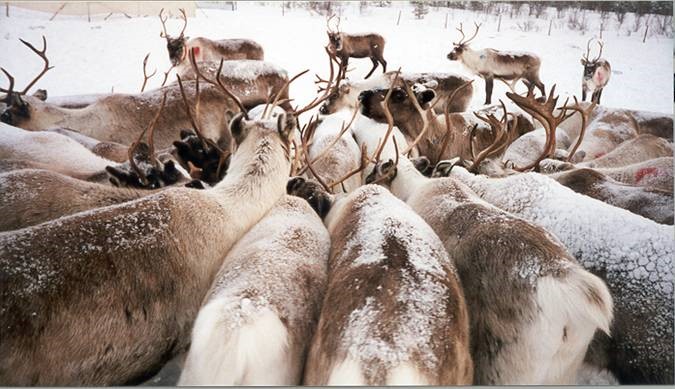
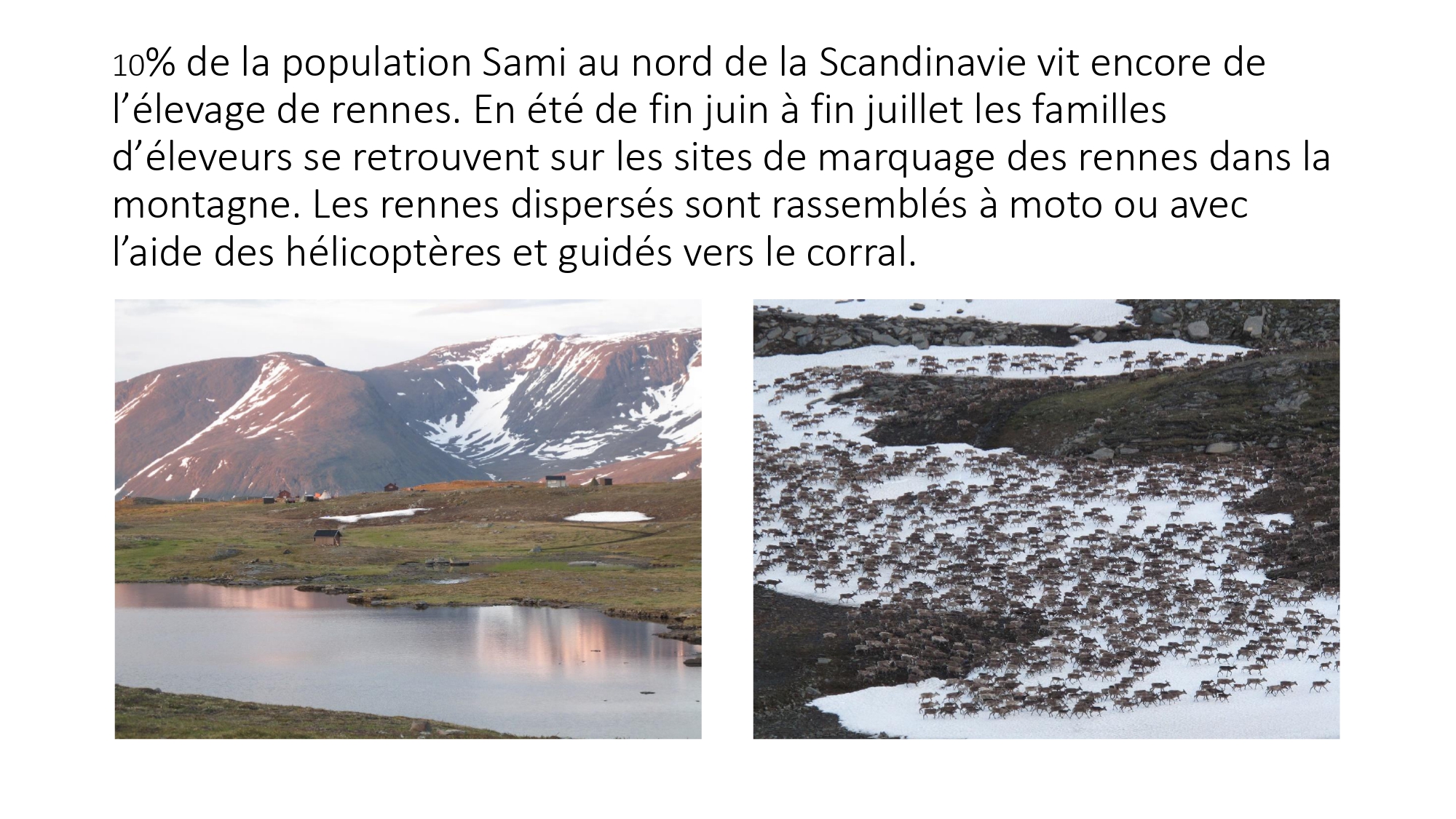
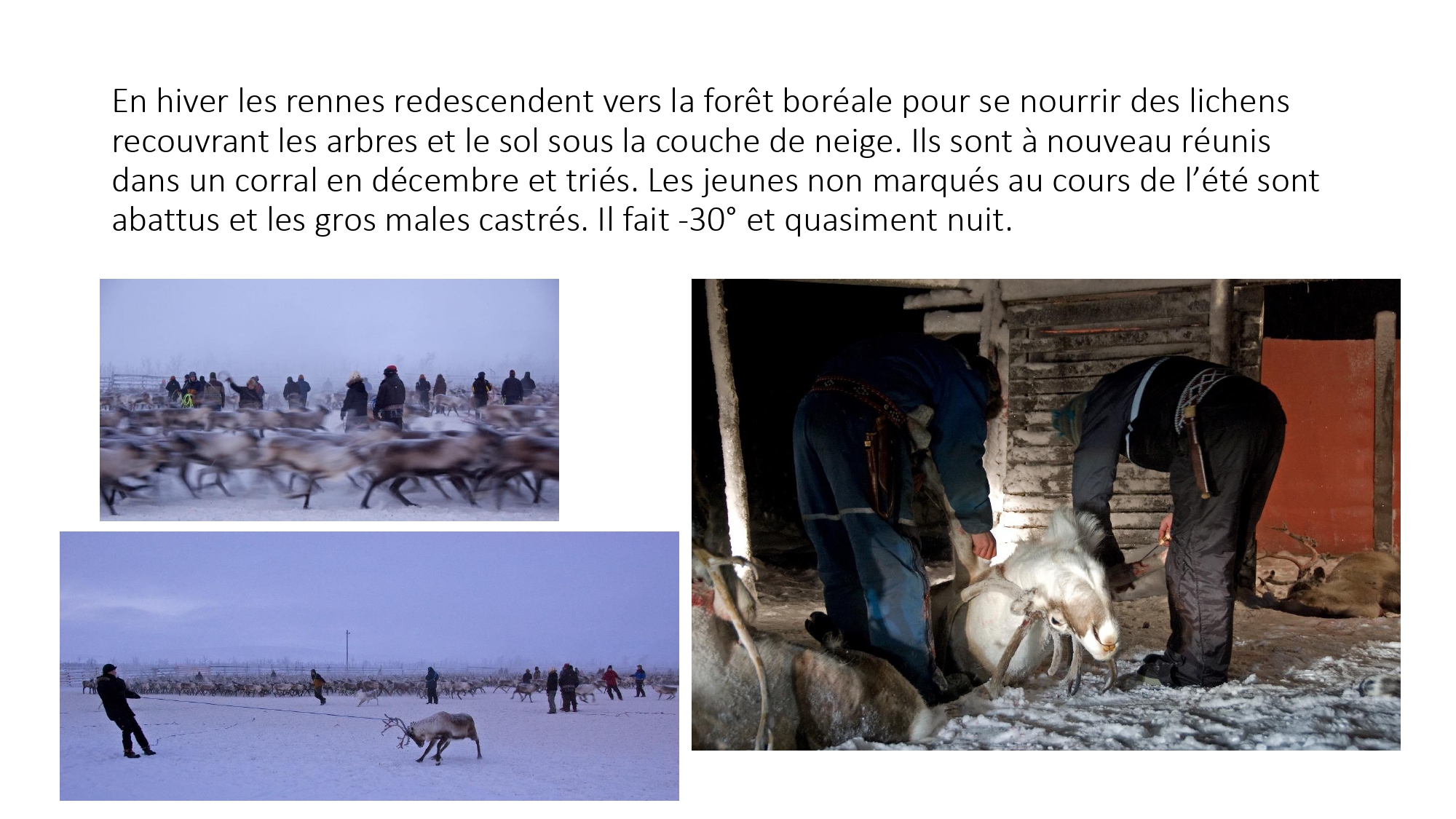
Over the course of a year, the reindeer move from the winter location in the forest up to the summer location in the mountains. The distance between these places is about 400 kilometres. In a typical year, the reindeer come down from the mountains at the beginning of winter. In January, the reindeer herders gather them in the forest in big corrals. Each family keeps its own reindeer in a separate group, which can be from 100 up to 2000 reindeer. It is easier to look after them when they are in smaller groups. The herders look for places with good lichen underneath the snow and then leave the herd alone in this area with few tracks leading to it. If there are too many tracks, the reindeer wander off and can spread over a wide area where it will be difficult to gather them together again. Also, they can get mixed up in another family’s herd. The small groups of reindeer and the herders stay together until the beginning of June.
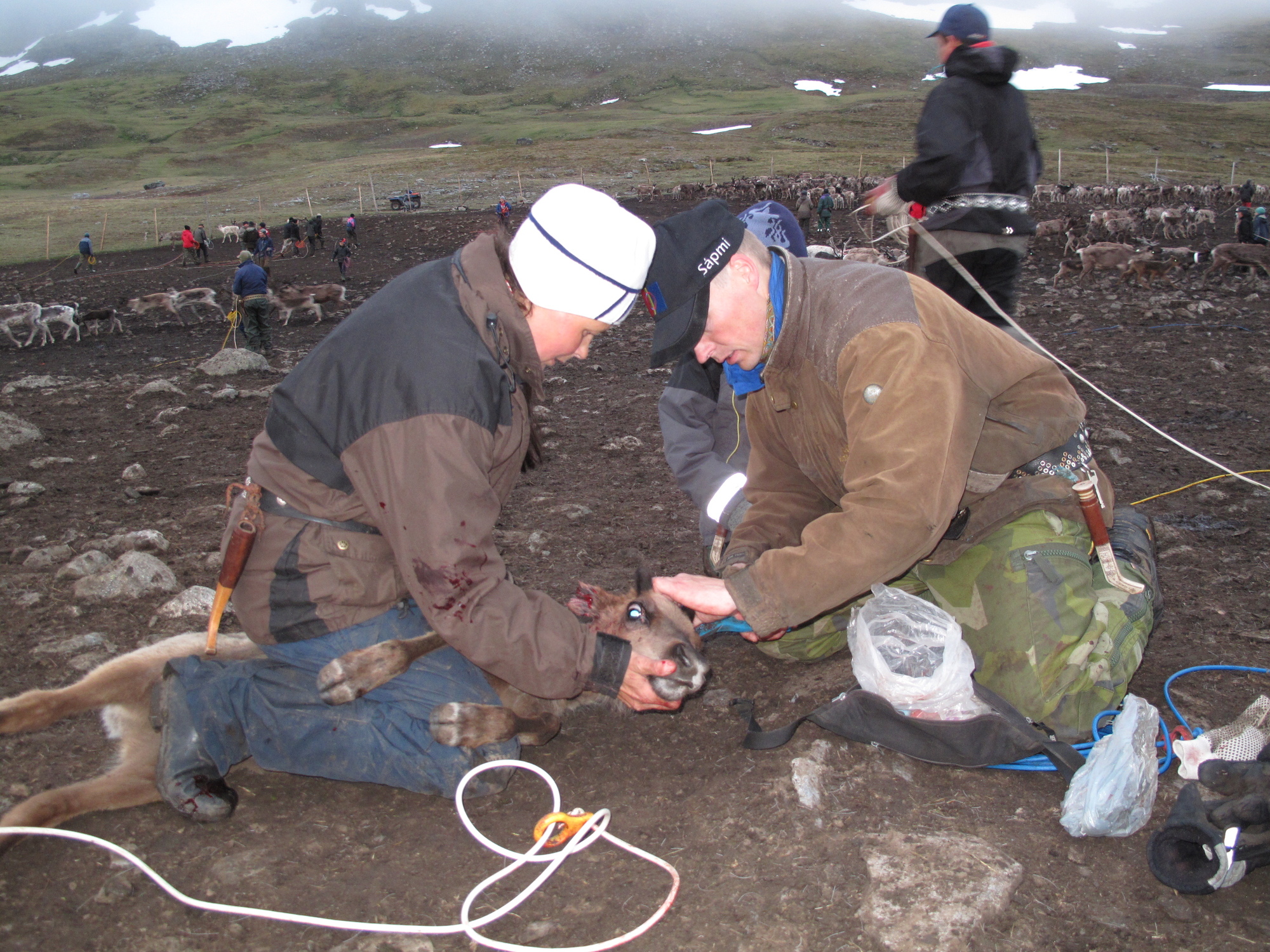
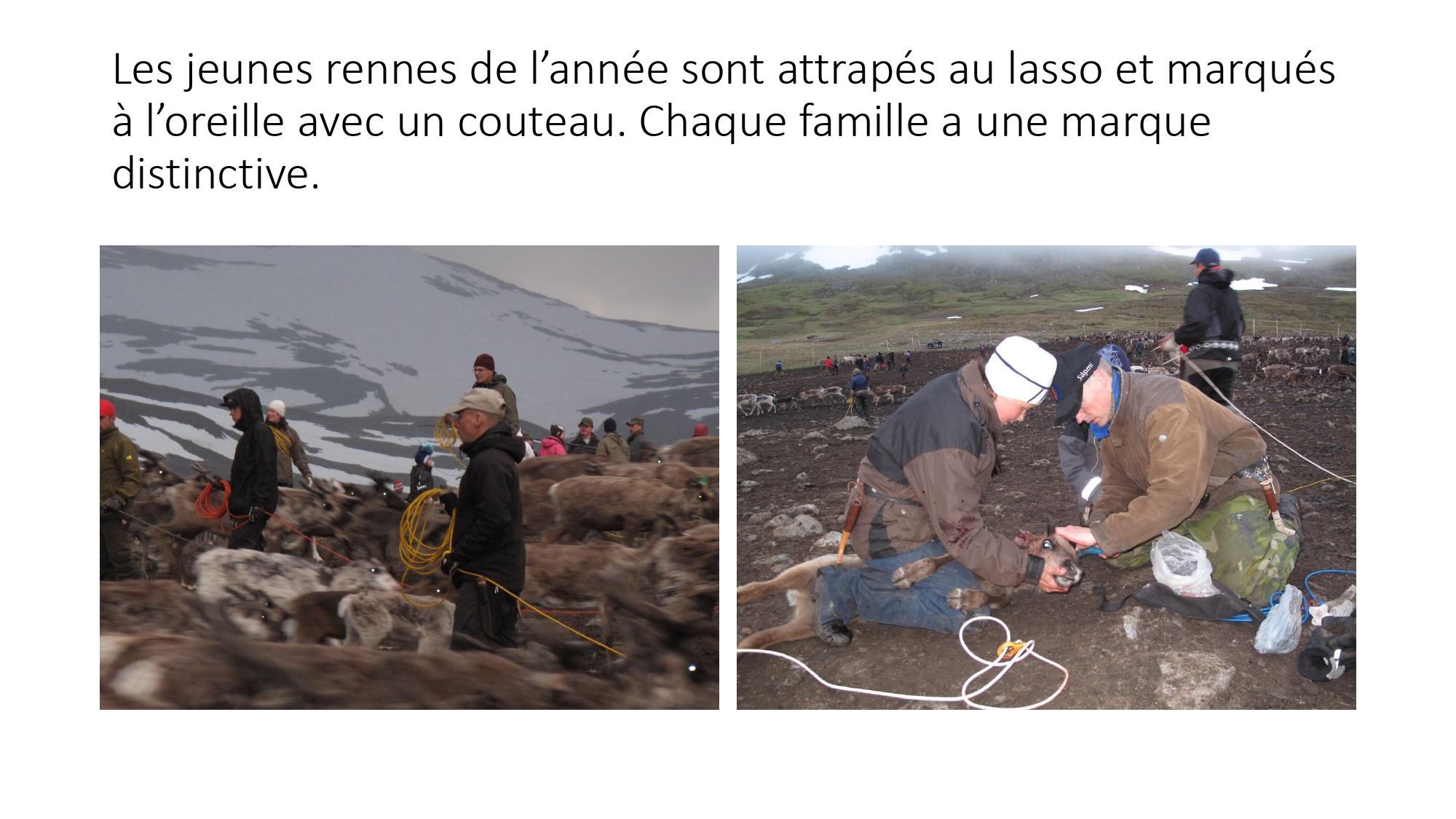
In April, the females start to go into the mountains to give birth to the calves. The herders help them by making tracks in the snow with snowmobiles. The reindeer walk slowly up to the calving area, which takes about two weeks. Very often the male reindeer (the Sámi word for a reindeer bull is SARV) do not want to follow the rest of the herd up to the mountains. The herders leave them alone so they can walk there by themselves. The female reindeer (VAJA in Sámi) give birth in the month of May. After the calves are born, the herders leave the herd alone, and the reindeer walk further, to the border of Norway. By the middle of July, the calves are big enough to be marked on the ears. This ear marking does not hurt, and the bleeding stops in a few days. Each member of the sameby has his own mark, and this is often transmitted from great grandfather to son or grandson. But a family can also create a new mark. At the end of July and through August, the reindeer are left free to roam in the mountains.
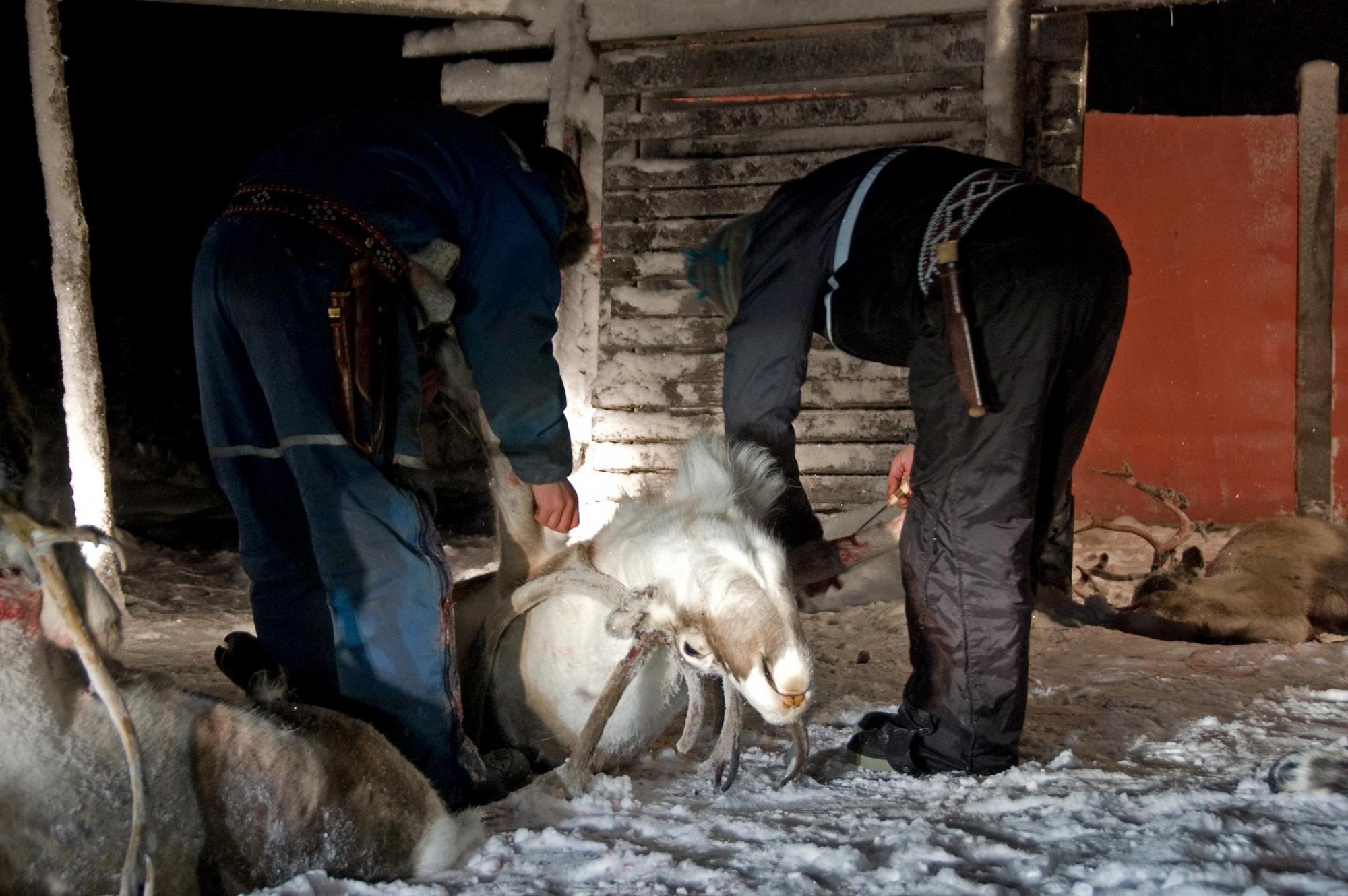
In September, the reindeer herder slaughters the SARV (male reindeer). In the beginning of October, rutting (BRUNST) begins, and the reindeer gather in small groups. The end of November is the time when the herders gather the reindeer and put them all in a corral at the foot of the mountain. Altogether, there can be up to 10,000 reindeer at a time, which are separated into smaller groups by the people of the sameby. In January, the herders will take the reindeer to the forest to spend the winter. Today, a lot of the landscape has been destroyed by the forestry industry, so there are few remaining areas where reindeer can find food on the way to their overwintering area. So nowadays, the reindeer are transported there by trucks. So this is a year in the life of the reindeer and the reindeer herder
Food
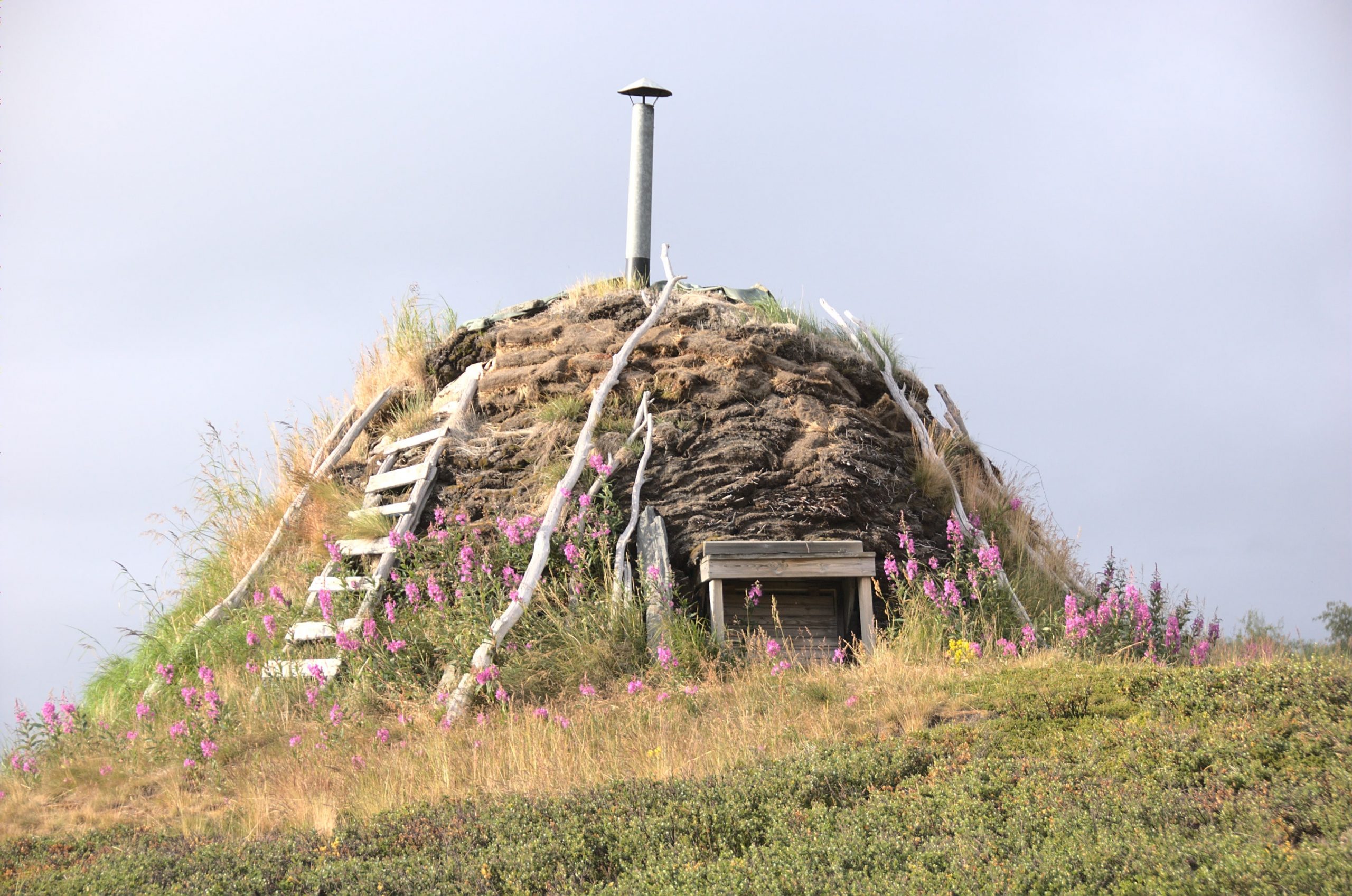
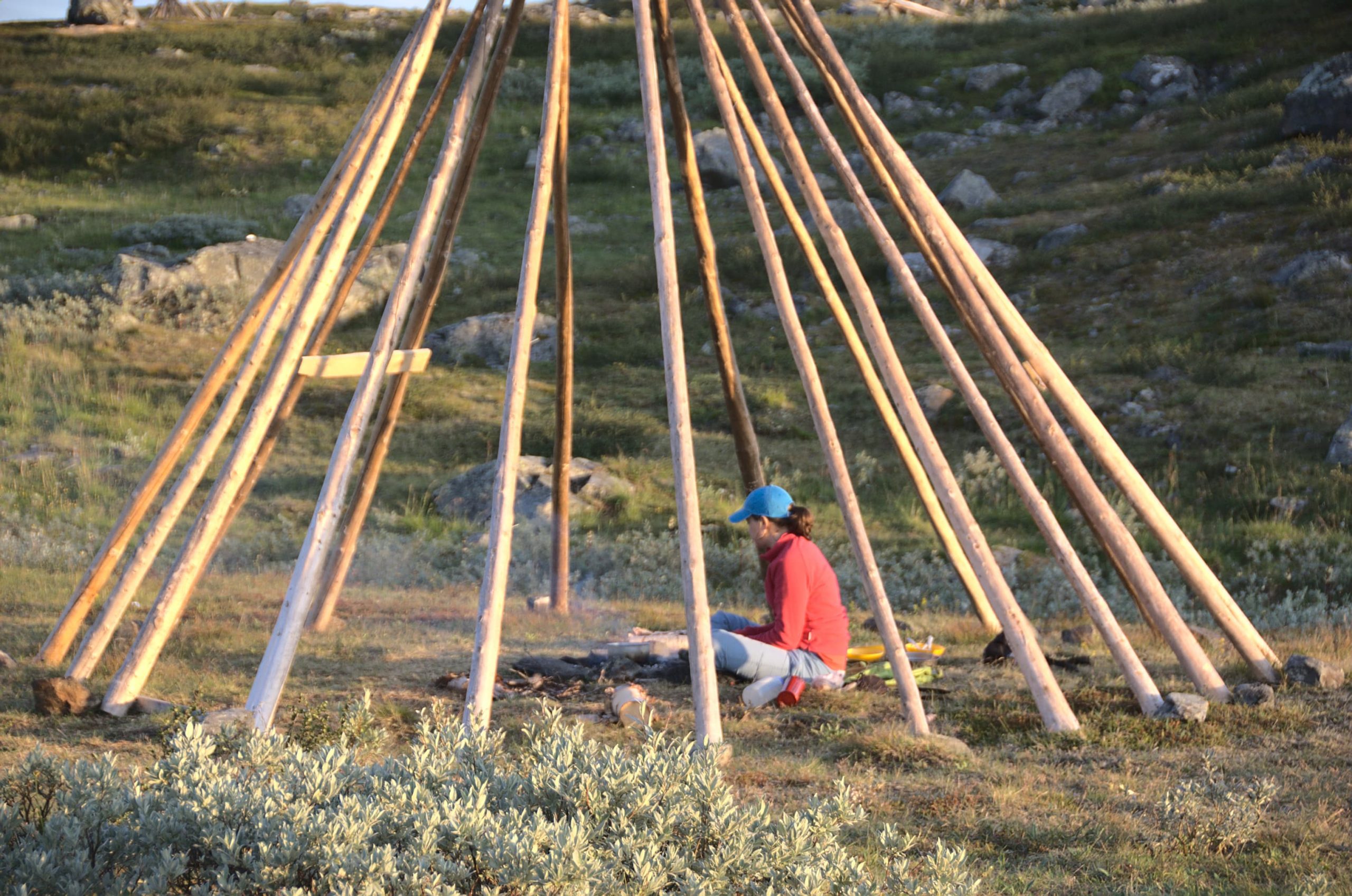
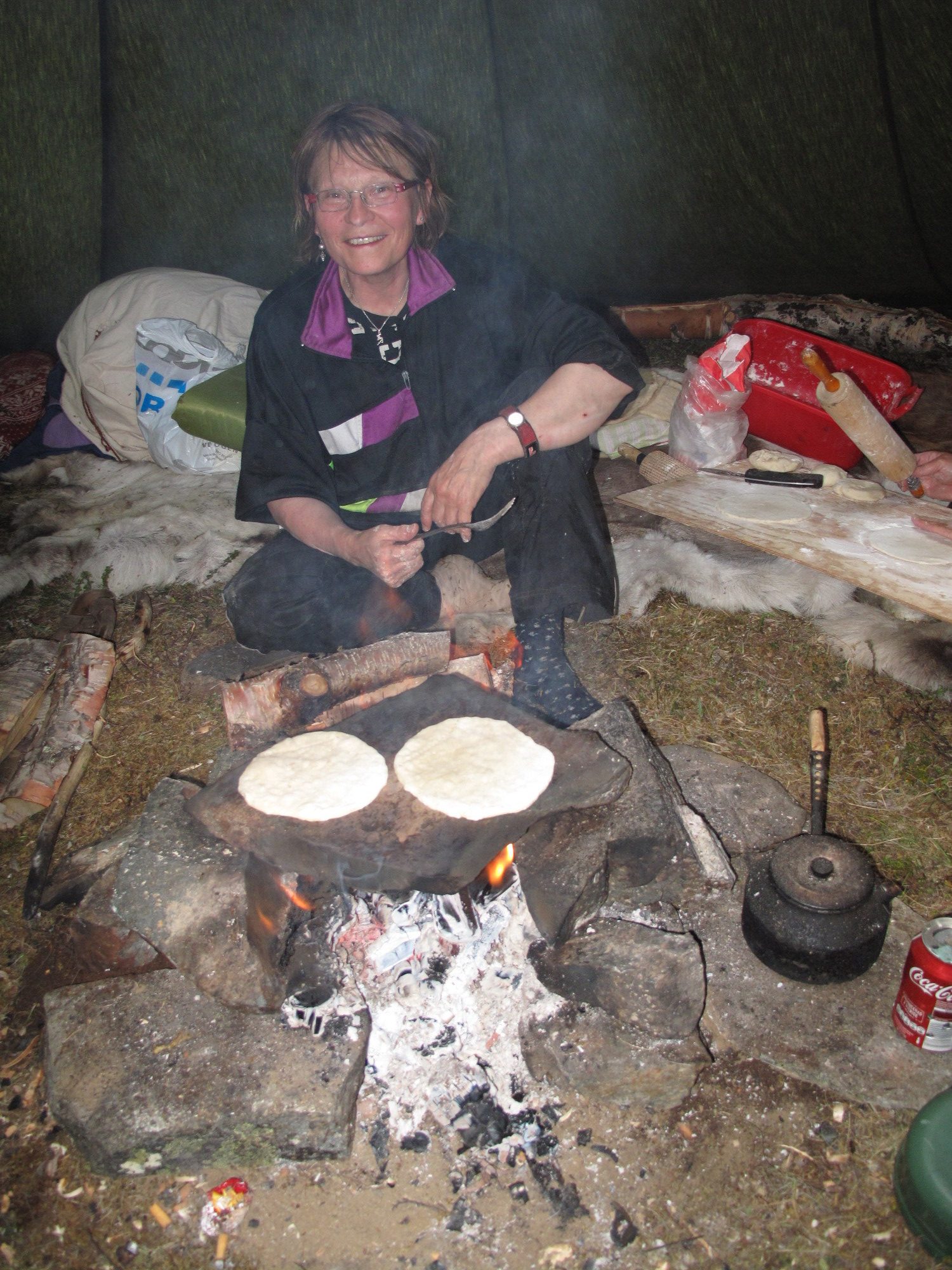
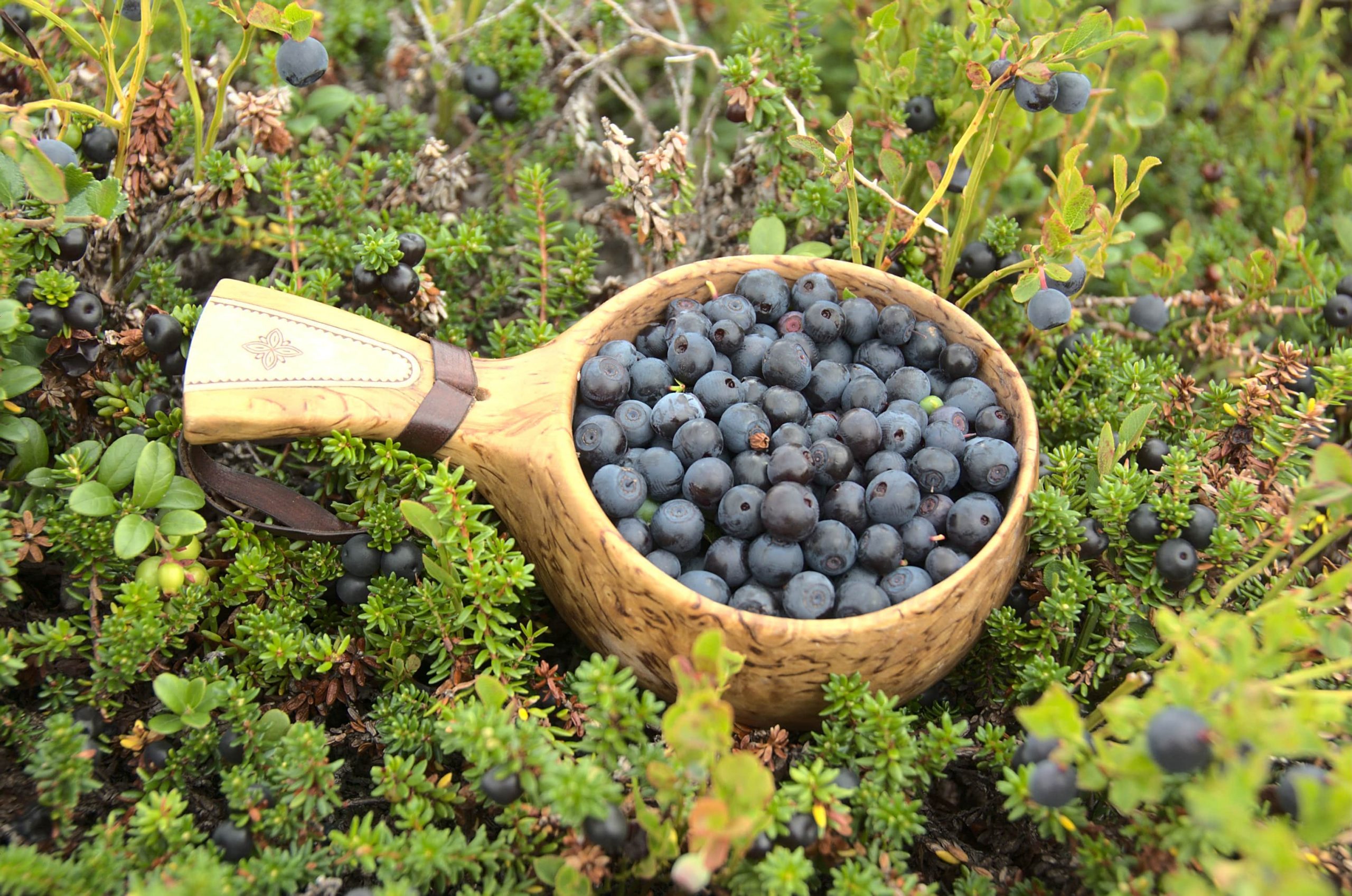
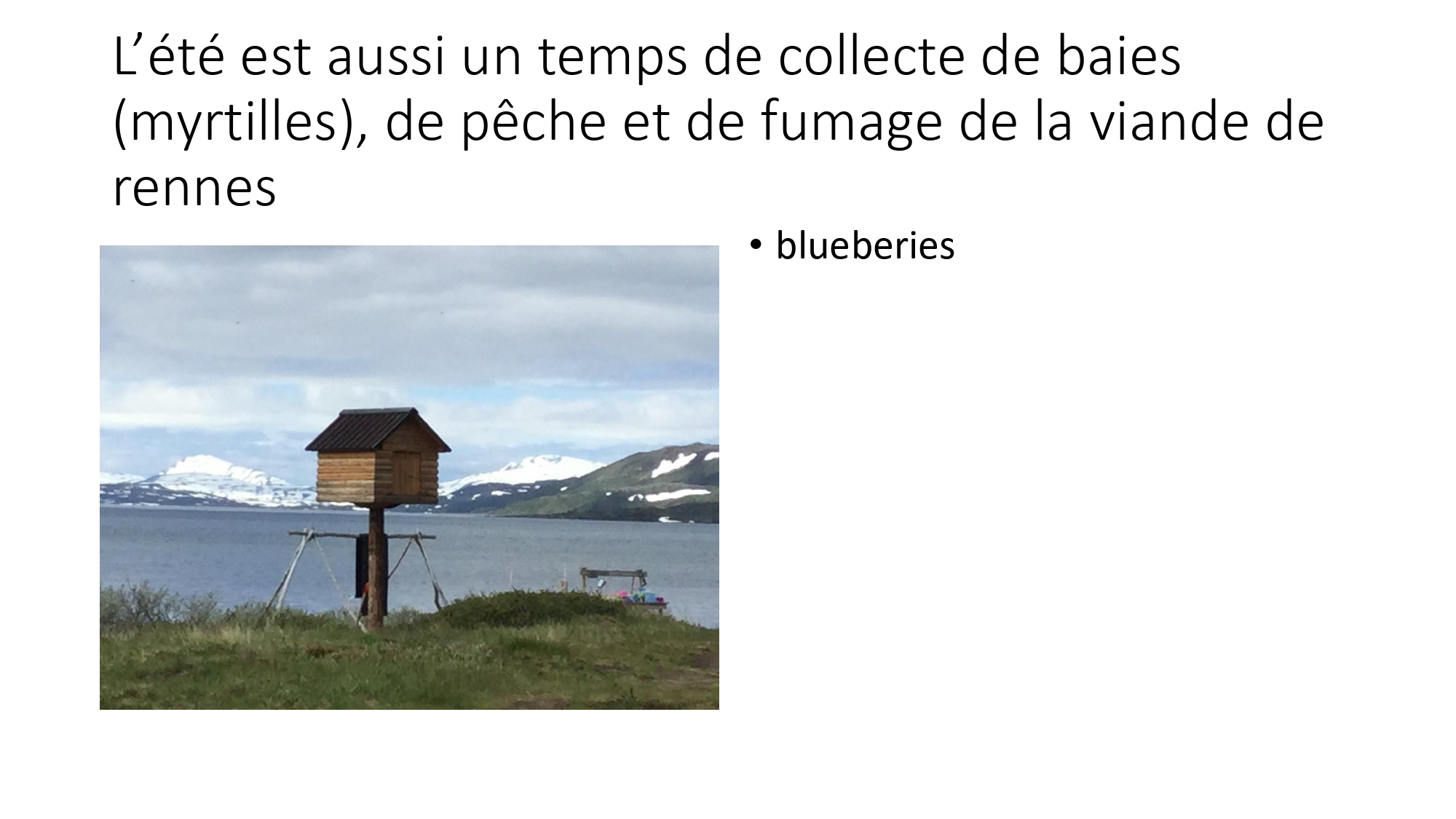
The food we eat is locally produced. It comes from hunting game including reindeer, moose, bear, ptarmigan and wood grouse and from fishing – mainly arctic char. In the autumn, we pick berries such as blueberries, cloudberries and lingonberries. We do not have a big tradition of growing vegetables, but some of us grow potatoes, turnips, carrots, onions, different kinds of cauliflower, and lettuce. We often salt the meat and fish and then smoke it in the KÅTA (a traditional hut). We cook a lot of different types of meals; often we make soups from what we hunt and harvest. In March and April we prepare the meat that we will eat during the summer. We mostly smoke and dry it. We also have different ways of preparing the blood from the reindeer. When the meat is ready, we store the dry food and drive it up to the summer huts in the mountains with the snowmobiles.
Arts & handicrafts
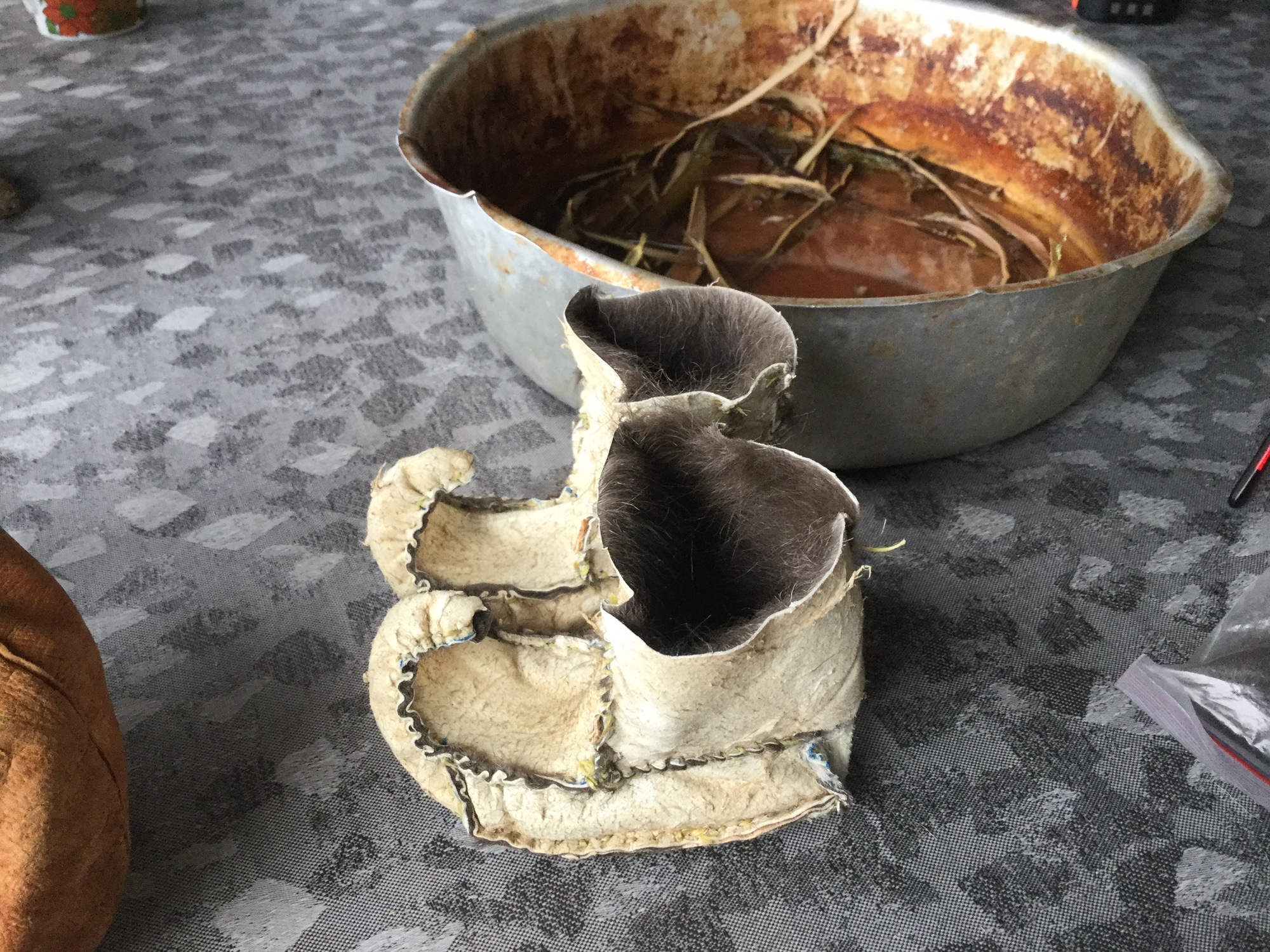
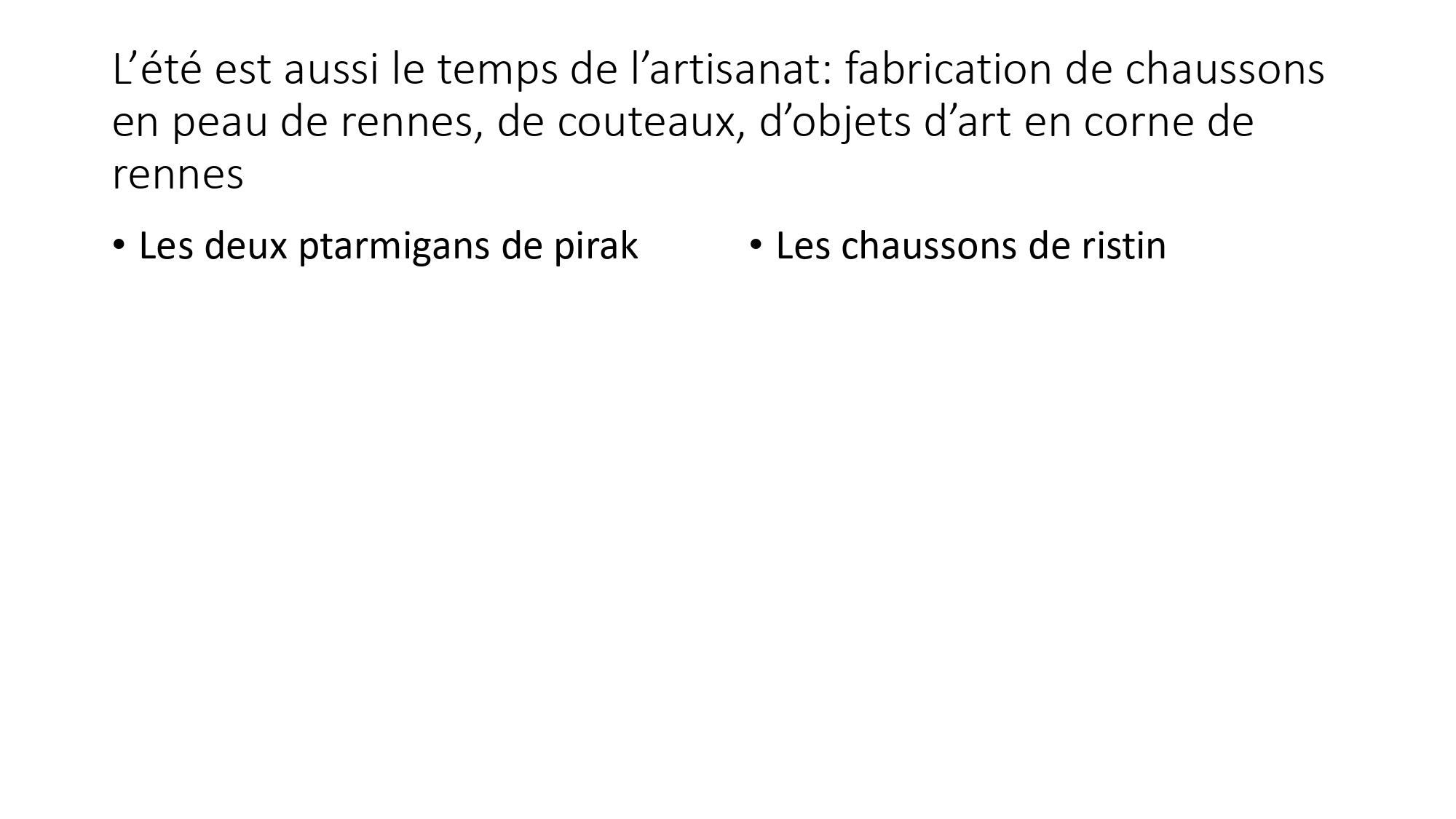
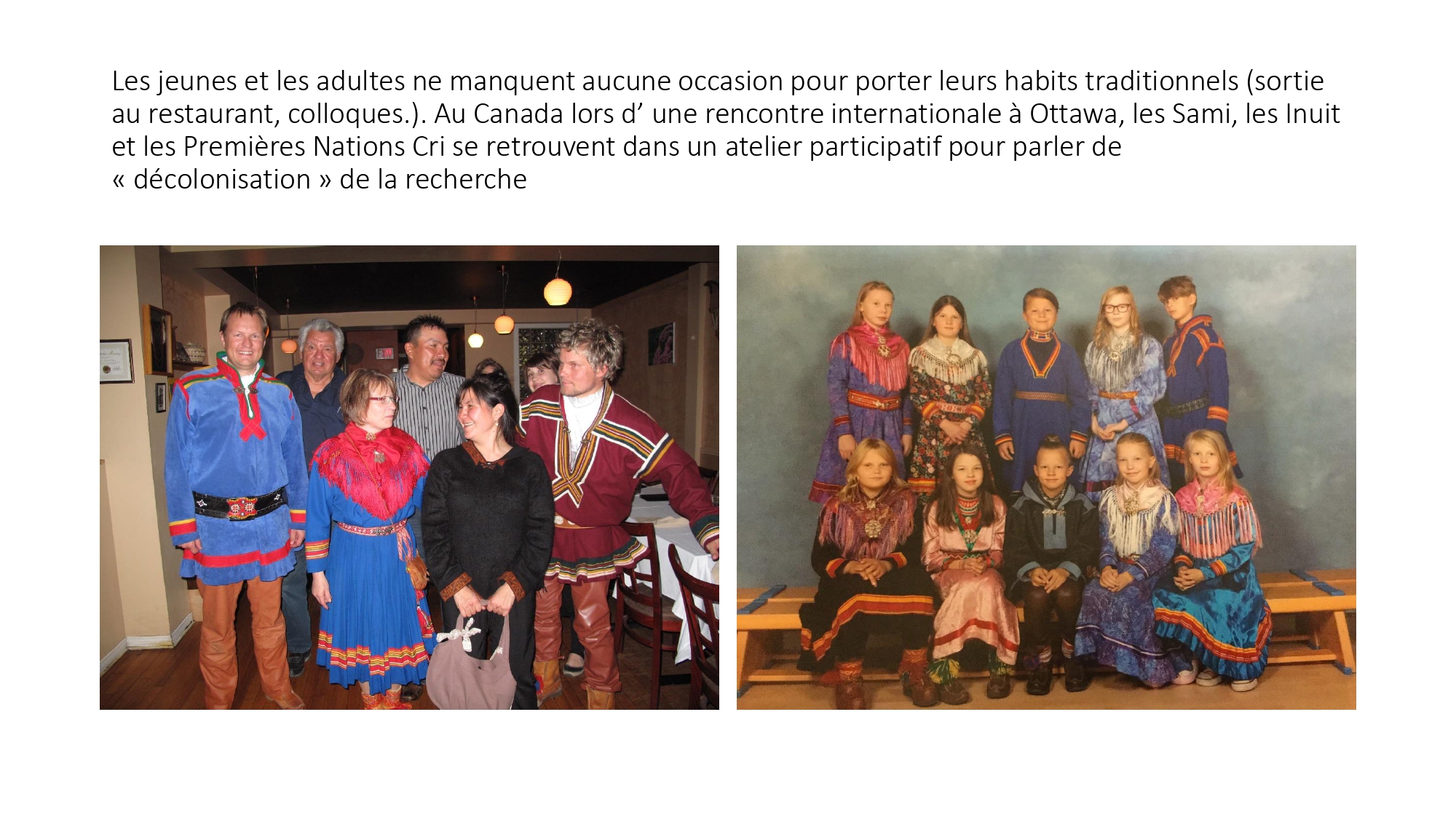
The clothing of the Sámi people is designed for the Arctic climate. The clothes are made from different animal skins or thick fabric that withstands the wind and bad weather. Everything is made with not getting wet or frozen in mind. At the same time, it is also important that the product is beautiful. People enjoy bright, strong colours.
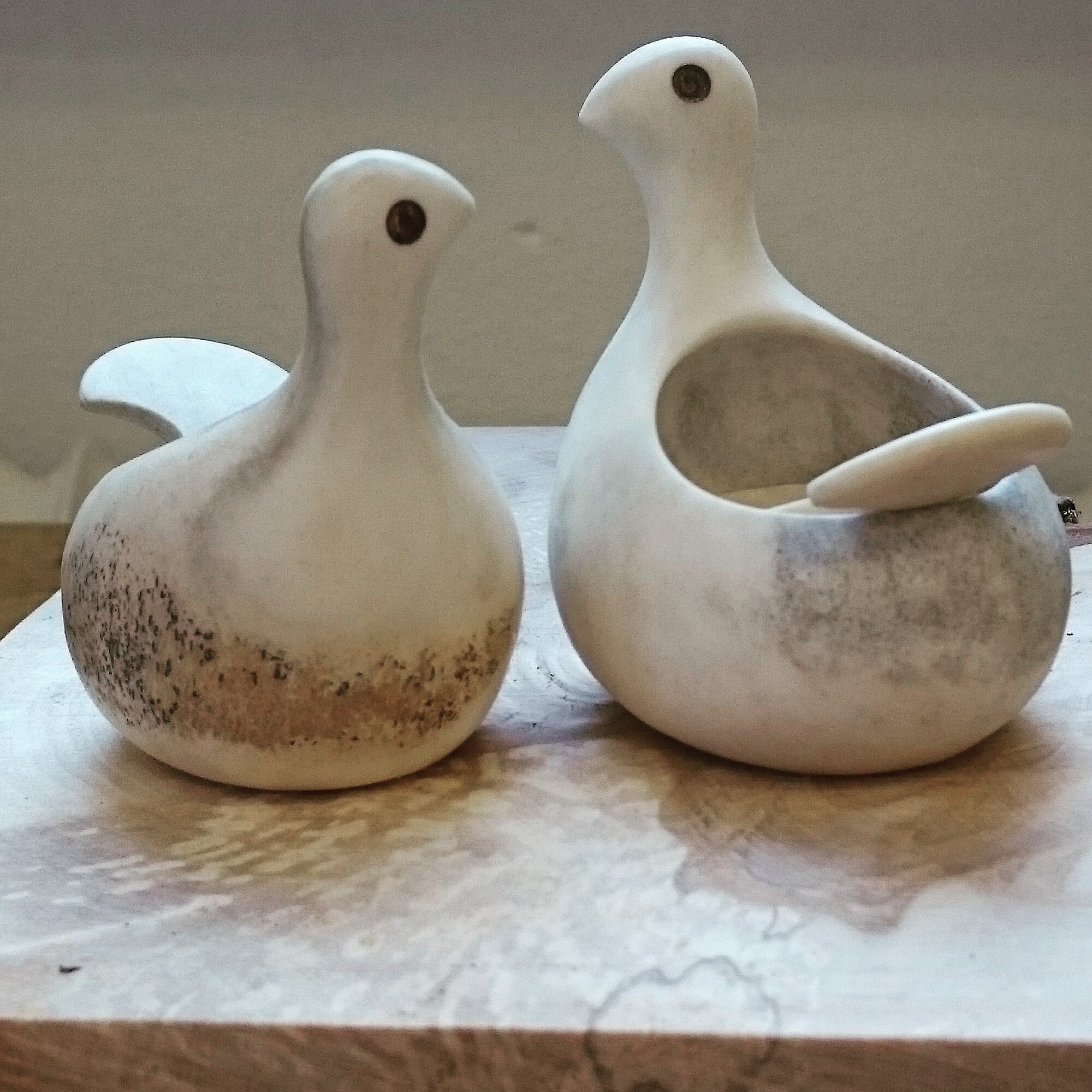
The Sámi people have a strong tradition of making arts and handicrafts. It is very important to be a skilled artist, both in painting and craftmaking. In the primary school curriculum, Sámi children learn handicrafts (SLOJD): for example, how to sew Sámi clothes or make traditional wooden boxes or drinking cups. The students do one and a half hours of handicrafts each week. In most Sámi families, there are members that make different artistic creations, and children often participate in this kind of work. At the Sámi school, when students reach grade 6 (age 13), they make their own hooded cape (LUHKKA) and a Sámi knife made out of antler and birch wood.
To learn more about arts and handicrafts after completing school, students can go to the Sámi University in Kautokeino in Norway or the Sámi Training Centre (Samernas) in Jokkmokk in Sweden. There is a two-year programme in traditional handicrafts that teaches how to make traditional clothing or everyday products from antler and wood. The students are taught how to use all the parts of the reindeer: the skin (including from the legs and the head), bone, antler and sinew (senor), as well as how to take this from the animal. In the course, the students slaughter a reindeer and learn from the elders how to use every part of the animal for handicrafts. From the elders, the students learn not just handicraft skills, but also Sámi culture and values.
To be a painter, Sámi people need to go to the Swedish Art Academy. After their degree, the artist can then get help from other Sámi artists »

Mikael est directeur de l’école Sami de Jokkmokk en Suède et fils de Lars Pirak grand peintre Sami